
Cars & transport in Alicante
Transport and getting around in Alicante: what makes more sense — public transport or a car, and how it works with licenses and parking.
Car rental in Alicante: choose and book online
Catalogue of local rental cars in Russian: photos, full price for all days upfront, filters for ’no deposit’ and ’no credit card required’. Found what you want — book it instantly online.
Browse cars and pricesAd. Renot Software OU. TIN 12352497
Airport transfer in Alicante: choose a car and price online
Driver with a name sign, price known upfront and unchanged in traffic, 90 minutes of waiting included and free cancellation. Promo code TPO5 — minus 5%.
Browse cars and pricesAd. IT Travel LP. TIN SL024264
How transport in Alicante works: buses, trams, cars, and licenses
Alicante is a compact city where you can get by without a car within the center. But once you venture beyond the historic core — into suburban urbanizaciones, toward the Campoamor beaches, or into the mountain villages of the province — a personal vehicle stops being an option and becomes a necessity. Understanding how transport in Alicante works is important before you move: it determines where to look for housing and how much to budget for getting around.
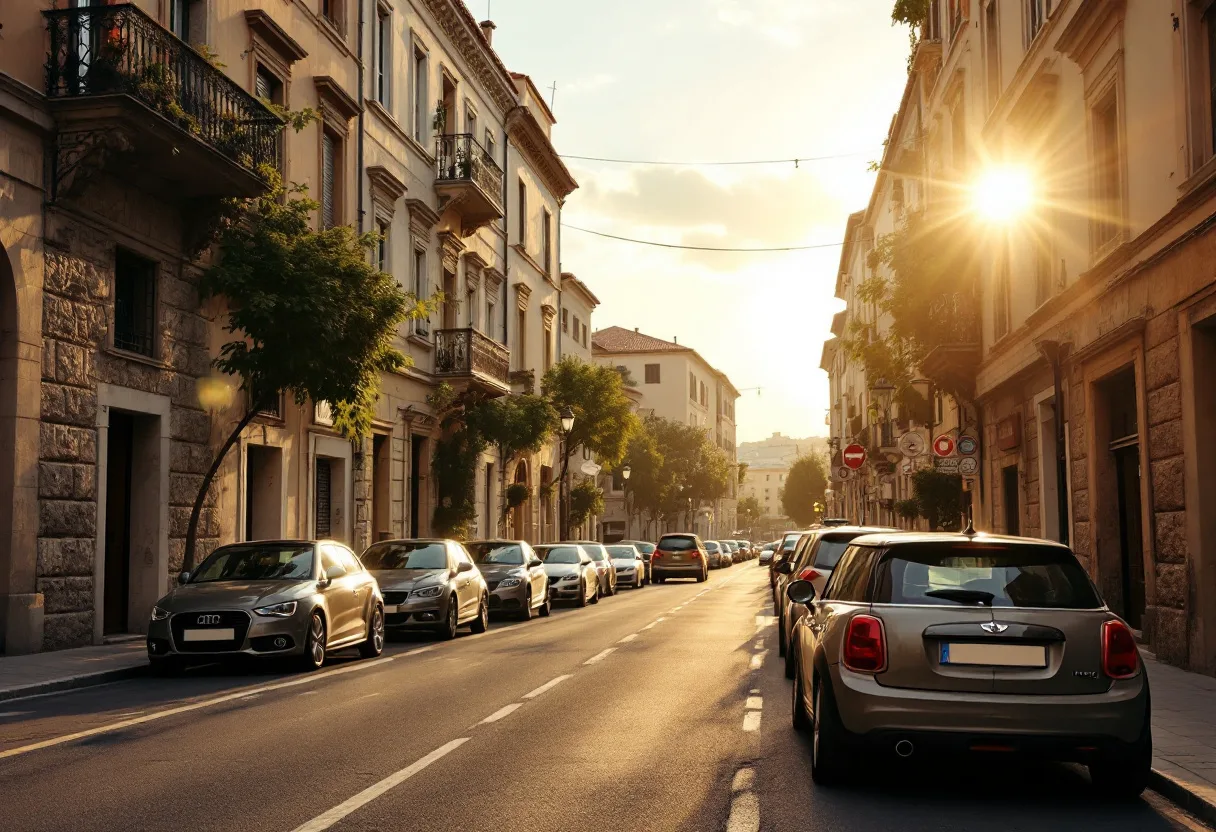
Public transport: TRAM, buses, and suburban trains
The main public transport operator is TRAM Metropolitano de Alicante. This covers both the bus network and a tram-rail system commonly referred to as the «Alicante metro,» though it is technically a light above-ground metro (Línea 1 and Línea 2). Routes connect the city center with Benidorm, Dénia, the airport, and nearby suburbs.
Fare structure for 2026:
- Single bus or tram ticket — 1.45 €
- Monthly pass within the city — 35–45 € depending on zones
- Concessionary pass (students, pensioners) — significantly cheaper; check current subsidies from the Valencia regional government
Alongside TRAM, RENFE Cercanías operates a commuter rail service connecting Alicante with Murcia, Elche, and several other towns in the region. For regular travel between provincial cities, it is the most economical option.
Insider moment: TRAM lines are heavily crowded during peak hours (7:30–9:30 and 17:30–19:30), especially on the Alicante–El Campello stretch. If you’re travelling with children or luggage, allow extra time or take a car instead.
Buying a car in Alicante: purchase, insurance and running costs
A personal car is the norm for families and anyone living outside the city centre. The used-car market in Alicante is well stocked: the province has a high proportion of elderly owners, and many vehicles are sold in good condition with low mileage.
| Option | Best for | Budget (EUR) | Key note |
|---|---|---|---|
| Used car from a private seller | For those who already have a residence permit | €5,000–15,000 | NIE required to register the transaction |
| New car at a dealership | Families, sole traders, long-term residents | from 18,000 | Installment plans available with a Spanish bank account |
| Long-term rental (renting) | Digital nomads, first year | 350–600/month | No registration required, all inclusive |
| Car-sharing (Share Now, Avancar) | City trips, occasional use | from €0.26/min | Limited zone, poor suburban coverage |
If you want to buy a car in Alicante, the first step is obtaining a NIE (foreigner identification number). Without it, the transaction is simply impossible: neither registration with the DGT nor taking out mandatory insurance (seguro obligatorio) can proceed. The cost of compulsory third-party insurance in Spain ranges from €300 to €800 per year, depending on the driver’s age, experience, and vehicle type.
Hidden cost: when buying a used car privately, you’ll also need to pay transfer tax (ITP) — in the Valencia Community the rate is 4% of the vehicle’s value. Many newcomers are unaware of this and don’t budget for it.
Driving licence in Alicante: how Russians can obtain a Spanish one
The question of exchanging a driving licence is one of the most painful for relocators from Russia, Ukraine, and Belarus.
Russian driving licences are valid in Spain for 6 months from the date of obtaining residency — not a year, as is often stated. After that period, driving with them is not permitted: you need a Spanish licence. The key point here is that exchanging a Russian licence is not possible — there is no mutual recognition agreement (convenio de canje) between Spain and Russia, nor with Belarus or Kazakhstan. The exception among post-Soviet countries is Ukraine, Georgia, and Moldova: agreements do exist with them, allowing licence exchange without exams (Ukraine — since 2010, Georgia and Moldova — since 29 September 2024). The current list is published by the DGT. This means there is no ’exchange’ route — only the full exam process through the DGT: theory plus practical.
A key point: there is no reciprocal agreement between Russia and Spain. This means that a holder of a Russian driving licence cannot simply walk into the DGT (Dirección General de Tráfico) and exchange it — a full licensing process is required.
Procedure for obtaining Spanish driving license through an exam:
- Enroll in a driving school (autoescuela) — there are dozens in Alicante, prices are comparable
- Pass the theory exam (30 questions, up to 3 mistakes allowed) — in Spanish
- Practical driving test — taken in a driving school vehicle
- Obtaining a license through DGT
Average total cost for the full cycle is 1,200–2,000 €, including classes, the exam, and administrative fees. Timeline: 2 to 6 months depending on lesson frequency and number of attempts.
Insider insight: some driving schools in Alicante offer lessons in Russian, which significantly speeds up theory preparation. Search for «autoescuela ruso Alicante» — it’s a small market, but it exists.
Ukrainian driving licenses are exchanged through a separate procedure under EU agreements for temporarily displaced persons — the conditions have changed over time, so it’s best to verify current requirements directly with the DGT or through the consulate.
Common mistakes
- Assuming you have a full year. The deadline is 6 months from the date your residency is granted — and the clock starts from that moment. Miss it and you are behind the wheel without a valid document, facing a fine and the risk that your insurer will refuse to pay out in the event of an accident.
- Buying a car without an NIE. The transaction can technically go through, but registering the vehicle or insuring it without an NIE is impossible.
- Overlooking ITP when buying a used car. 4% of the vehicle’s value is an unexpected expense for those used to the Russian registration process.
- Treating the Alicante TRAM as a full metro system. The network does not cover all neighbourhoods and runs on intervals noticeably longer than those of major European cities.
- Taking a long-term car rental without weighing the alternatives. Renting for 2–3 years can end up costing more than buying a used car, especially if you plan to stay long-term.
- Ignoring restricted traffic zones in the centre. The historic centre of Alicante has entry restrictions — fines are recorded automatically by cameras.
Bottom line: what to choose
For daily life in central Alicante, public transport is sufficient — the TRAM and buses cover the main routes, and a monthly pass at €35–45 makes it a sensible choice. Families with children, those renting in the suburbs, or anyone who regularly travels around the province will need a car from the first weeks. The optimal start is short-term rental for the first month, while simultaneously sorting out your NIE and looking for a used car on the secondary market. Do not put off the license question: it is best to start the process within the first six months of receiving your residence permit, while your Russian documents are still valid.
Guide to renting a car in Alicante — free
Deposit, insurance, and the deductible: how not to lose money on return. Straight to Telegram.
Car in Alicante and airport pickup — we will arrange everything
Monthly and longer-term rental, purchase with document verification, airport transfer with vehicle and price selection online. The search is free — just share your budget and timeline.
Submit a requestFind you a car
Rental and purchase, pre-transaction verification
Online transfer
The car and price from the airport — right on the website
Not a fan of bots — write to a person
The SVOY app — a marketplace for fellow expats
Services, goods, housing, and jobs worldwide. Post your own listing for free.
SVOY SERVICES
We’ll help with that in Alicante
These tasks are handled by services within the SVOY ecosystem.
Car
Car rental and purchase, as well as transfers anywhere in the world.
SVOY ECOSYSTEM
What else you may need
Tasks that most often come next. Each is handled by a dedicated SVOY service.
Rent or buy housing
Rental and purchase Alicante: prices by neighbourhood, property due diligence, and end-to-end transaction support — SVOY HOME.
Go to websiteRegularize your status
Residence permits, visas and status renewals in Alicante, certificates and apostille — SVOY Legal.
Go to websiteChildbirth and citizenship for the child
Childbirth in Alicante: clinics, newborn documentation and citizenship — SVOY Baby.
Go to websiteHalal community
Nikah, halal services, and the Muslim community in Alicante — SVOY Halal.
Go to websiteCars & transfers in Alicante — we’ll match it to your route and budget
Leave your contact — that’s all we need; we’ll ask the rest ourselves. If you’d like, so we can prepare for the conversation in advance, please specify your request below.
Need help relocating to Alicante?
In the international SVOY community you will find:
- Russian-language chat Alicante
- Housing and neighbourhoods
- Schools and kindergartens
- Doctors and clinics
- Lawyers and help with paperwork
- Verified contacts and recommendations
If you come with good intentions — you’re one of us.
Join the chat Alicante