
Cars & transport in Shenzhen
Transport and getting around in Shenzhen: what makes more sense — public transport or a car, and how it works with licenses and parking.
Car in Shenzhen: with a driver — yes; driving yourself — only with a Chinese licence
China does not recognise Russian or international driving licences: no rental company will hand over a car on that basis, this is the law, not a rule of any particular company. You may only drive yourself with a Chinese license or a temporary Chinese driving permit.
That is why the simplest option is a car with a driver for the hours you need, or an airport transfer: you choose online, and the price is known in advance.
Ad. KG GLOBAL LIMITED. TIN HE399323 · Ad. IT Travel LP. TIN SL024264
Airport transfer in Shenzhen: choose a car and price online
Driver with a name sign, price known upfront and unchanged in traffic, 90 minutes of waiting included and free cancellation. Promo code TPO5 — minus 5%.
Browse cars and pricesAd. IT Travel LP. TIN SL024264
How transport in Shenzhen works: metro, cars, and life without one
Transport infrastructure has a direct impact on quality of life and day-to-day costs in the city. Shenzhen is one of the rare megacities where you can live and work fully without a private car. But for some expats a car is still necessary: visiting factories in Dongguan, logistics, family mobility. Here we look honestly at both scenarios — with real figures, realistic timelines, and the details you usually only discover after you’ve already moved.
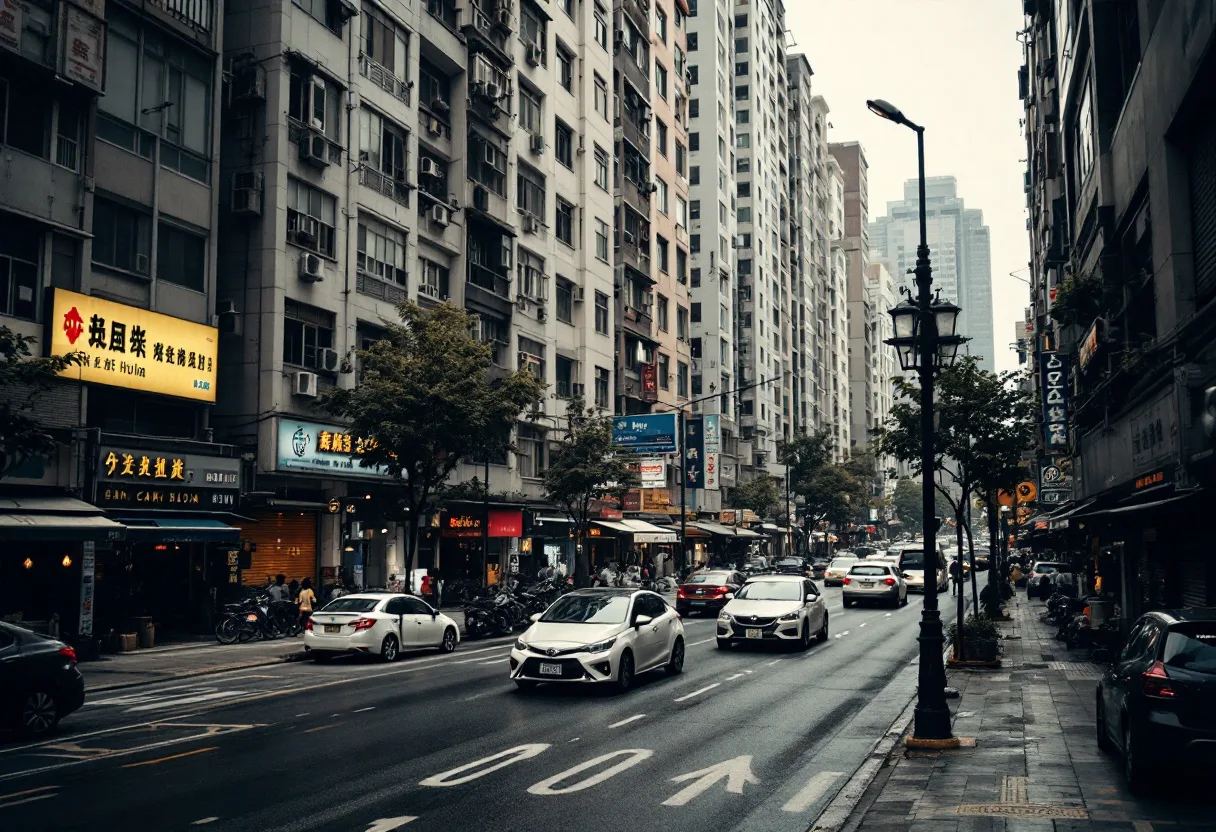
Shenzhen Metro: coverage, fares, and network logic
Shenzhen Metro is one of the most developed systems in China and the world. As of 2026, 16 lines are in operation, covering areas from the northern districts of Longhua and Longgang to the Futian CBD, the Nanshan tech cluster, and the border station at Luohu. New lines open regularly, and construction is a permanent feature of the city.
Fare: 2–10 CNY depending on distance. For reference, the route from Luohu to Nanshan (about 40 km) costs 7–8 CNY. Payment by UnionPay card, Alipay or WeChat Pay app, or the physical Shenzhen Tong transit card. Foreign Visa and Mastercard do not work at the turnstiles — the first thing to know on arrival.
Peak-hour frequency — 2–4 minutes. In-station signage is duplicated in English, but in-carriage announcements are in Mandarin and Cantonese only. The Metro Man app or the built-in map in Amap (Gaode) handles routing without any knowledge of the local language.
Taxis and DiDi: what getting around the city actually costs
A regular taxi in Shenzhen costs 12–30 CNY for most city trips. The base fare is around 10 CNY, then the meter runs. One catch: drivers rarely speak English, so you’ll need to show your destination as Chinese characters or coordinates in Amap.
DiDi (China’s equivalent of Uber) partially solves the language barrier — the interface is available in English, and addresses can be entered in pinyin or via a map. Prices are comparable to a regular taxi or slightly lower. One important caveat: to register with DiDi you need a Chinese phone number and a linked WeChat Pay or Alipay account — without these the app will not work.
Electric scooters and bike-sharing (Hello Bike, Meituan Bike) are a separate and very practical option for short trips. Rental costs around 1.5–2 CNY per 30 minutes. Cycling infrastructure in Nanshan and Futian is fairly well developed.
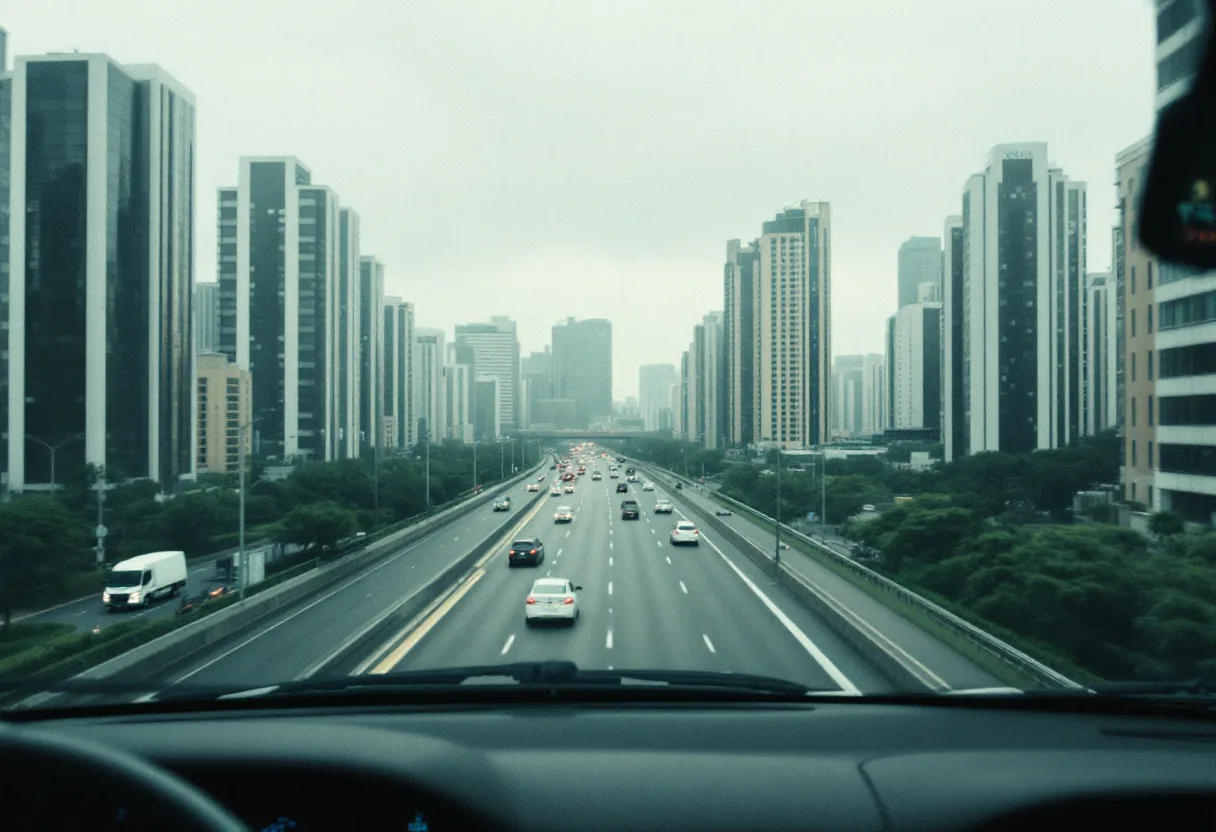
Cars in Shenzhen: buying, registering, getting a licence
Driving licence and exam
This is the main barrier for expats. Foreign driving licences are not valid in China — not Russian, not European, not international. You must pass the Chinese driving licence exam. The good news: the theory test is available in Russian — this is an official option at the local DMV (transport authority, 车管所, chēguǎnsuǒ).
The theory test covers 100 questions; you need to score 90 or above. The practical exam is held at a test centre, with instructions given in Chinese. Many expats take 5–10 driving lessons specifically for the practical component, even with years of experience behind the wheel. Total time from submitting documents to receiving a licence is 2–4 months, including the medical check and exam booking.
Car purchase
Buying a car in Shenzhen is entirely feasible, but there is a regulatory catch: to register a vehicle in a foreigner’s name, you need a valid residence permit (a residential visa of at least work-visa category). A tourist or business visa is not sufficient for registration.
Shenzhen is one of the world’s leading electric vehicle hubs. The local market is dominated by BYD, Li Auto, NIO, Xpeng. Prices for new EVs start at 100,000–130,000 CNY for entry-level BYD models. Petrol cars cost more to run due to toll roads and parking fees.
Registering a new car in Shenzhen requires obtaining a licence plate through a lottery or auction — similar to Shanghai’s system but somewhat less restrictive. Electric vehicle plates are far easier to obtain, with a separate green quota and no auction required.
Comparing mobility options
| Option | Best for | Monthly spend | Key note |
|---|---|---|---|
| Metro + DiDi | Most expats | 500–1,500 CNY | Requires WeChat Pay / Alipay |
| Personal EV | Families, frequent out-of-town trips | 1,500–3,000 CNY (parking + maintenance) | Driving license and resident visa required |
| Long-term car rental | B2B business trips, flexible schedule | 4,000–7,000 CNY/month | Most companies require a Chinese driving licence |
| Bike-share + metro | Digital nomads, singles | 300–700 CNY | Impractical in rain and heat |
Border with Hong Kong: Lo Wu and Futian checkpoints
One of Shenzhen’s defining features is its proximity to Hong Kong. Luohu and Futian border crossings are 30 minutes from the city center by metro. The on-foot crossing takes 20–40 minutes including queues. For many expats, this is a regular route: banking, shopping, SIM card swaps, visa matters.
Crossing the border by car as an individual is more complicated: special permits are required to bring a vehicle into Hong Kong, and most expats simply leave their car on the Shenzhen side.
Common mistakes
- Counting on a foreign driving licence. Neither Russian nor international driving licences have legal force in mainland China. Getting behind the wheel without a Chinese licence is an administrative offence with serious consequences for your visa status.
- Downloading DiDi without a working WeChat Pay account. Without a linked Chinese payment account, the app is effectively useless. This needs to be sorted out in your first few days in the country, while you still have access to banking services.
- Trying to buy a car on a business visa. Vehicle registration requires resident status. Notarised powers of attorney through local contacts are a grey area with real risks.
- Underestimating how long getting a licence takes. Many people plan to ’pass in a month.’ Factor in scheduling, the medical exam, and two or three practical attempts, and the realistic timeline is 2–4 months. Plan any car purchase accordingly.
- Forgetting about the license plate lottery. Even after buying a car, you can’t drive it without plates. The wait for petrol vehicles can drag on. An electric car solves this — green-quota plates are issued much faster.
- Ignoring Amap in favor of Google Maps. Google Maps in China works through a VPN with delays and outdated data. Amap (高德地图) is the local standard — more accurate, faster, with up-to-date metro schedules and real-time traffic.
Practical takeaway
For most Russian-speaking expats in Shenzhen, the metro + DiDi combination covers 90% of needs at minimal cost. A personal car is justified for families, regular trips to industrial areas of Guangdong, or work that requires flexible mobility. In that case, it’s worth starting preparation for the Chinese driving test before relocating — the theory section is well-suited to remote study in Russian.
Guide to renting a car in Shenzhen — free
Deposit, insurance, and the deductible: how not to lose money on return. Straight to Telegram.
Car in Shenzhen and airport pickup — we will arrange everything
Monthly and longer-term rental, purchase with document verification, airport transfer with vehicle and price selection online. The search is free — just share your budget and timeline.
Submit a requestFind you a car
Rental and purchase, pre-transaction verification
Online transfer
The car and price from the airport — right on the website
Not a fan of bots — write to a person
The SVOY app — a marketplace for fellow expats
Services, goods, housing, and jobs worldwide. Post your own listing for free.
SVOY SERVICES
We’ll help with that in Shenzhen
These tasks are handled by services within the SVOY ecosystem.
Car
Car rental and purchase, as well as transfers anywhere in the world.
SVOY ECOSYSTEM
What else you may need
Tasks that most often come next. Each is handled by a dedicated SVOY service.
Rent or buy housing
Rental and purchase Shenzhen: prices by neighbourhood, property due diligence, and end-to-end transaction support — SVOY HOME.
Go to websiteRegularize your status
Residence permits, visas and status renewals in Shenzhen, certificates and apostille — SVOY Legal.
Go to websiteChildbirth and citizenship for the child
Childbirth in Shenzhen: clinics, newborn documentation and citizenship — SVOY Baby.
Go to websiteHalal community
Nikah, halal services, and the Muslim community in Shenzhen — SVOY Halal.
Go to websiteCars & transfers in Shenzhen — we’ll match it to your route and budget
Leave your contact — that’s all we need; we’ll ask the rest ourselves. If you’d like, so we can prepare for the conversation in advance, please specify your request below.
Need help relocating to Shenzhen?
In the international SVOY community you will find:
- Russian-language chat Shenzhen
- Housing and neighbourhoods
- Schools and kindergartens
- Doctors and clinics
- Lawyers and help with paperwork
- Verified contacts and recommendations
If you come with good intentions — you’re one of us.
Join the chat Shenzhen