
Schools and children in Valencia
Children and schools in Valencia: what options are available to Russian-speaking families, how much it costs and how to apply.
How the education system works in Valencia
Children’s education in Valencia is one of the first practical questions to resolve before or immediately after relocating. Which school your child attends affects how quickly they adapt, your monthly expenses, and even your choice of neighborhood: in Spain, a place in a state school is tied to your registered address.
The Valencian education system has one important feature that many families overlook: the region is historically bilingual. State schools teach in both Valencian and Spanish (Castilian) simultaneously. In practice, this means a child who knows neither language faces a double linguistic challenge — something that needs to be planned for in advance.
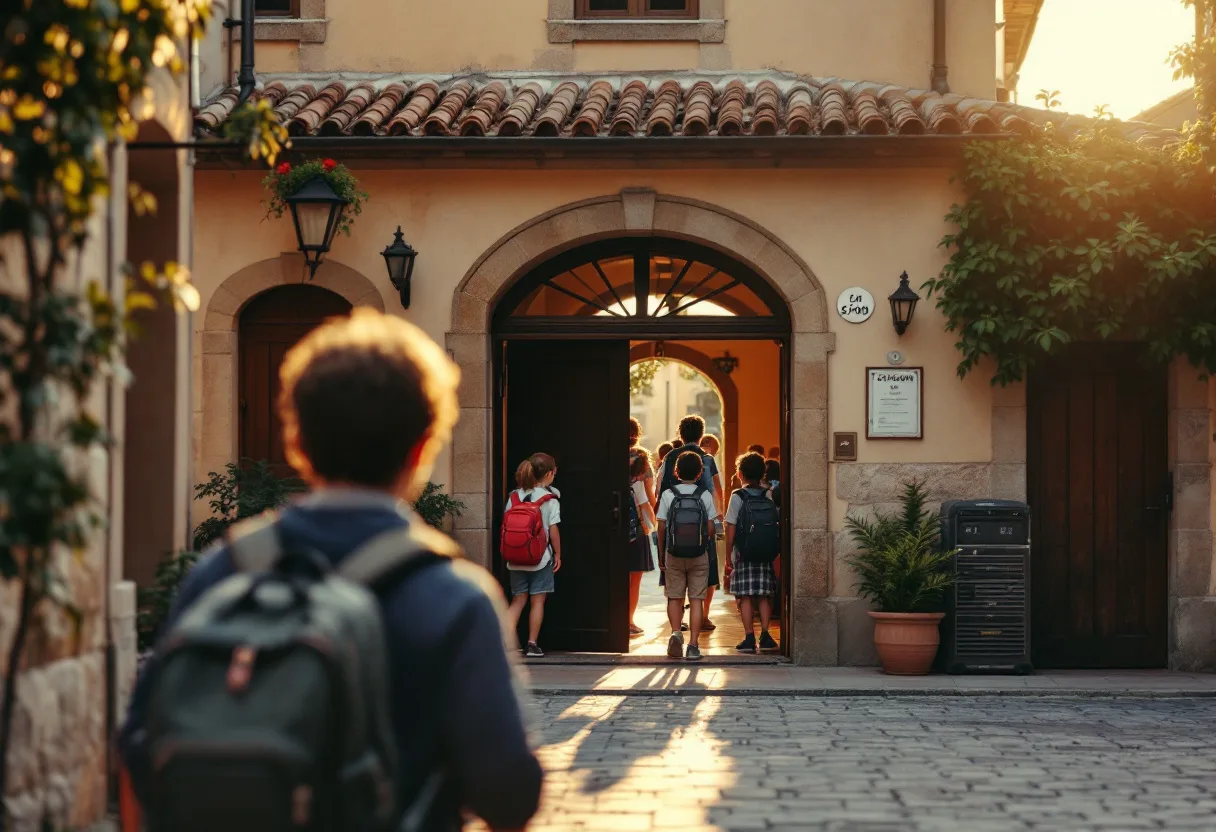
Valencia public schools: how to enroll and what to expect
State schools (colegios públicos) are free. The academic year begins in September, and enrollment opens in spring — usually March–April. The key requirement for admission is the padrón municipal: official registration at your residential address in the municipality of Valencia.
Without a padrón registration, it is impossible to apply for a specific school. That means you need to rent a flat and complete the registration before the enrolment period opens — otherwise you will have to settle for whatever place remains after the initial allocation.
A few practical points:
- In areas with a high concentration of young families (e.g. Rascanya, Benimaclet, Campanar), popular schools fill up quickly — priority goes to children registered within the school’s catchment zone.
- State schools offer no Russian-language support for bilingual children — integration happens through full immersion.
- There are also concertadas — partially subsidised schools. Formally free, but they may charge fees for additional activities (cuotas) — typically €30–80/month.
International schools and education for children in English
For families planning to return home or move on to another country, or who want to maintain a high academic standard in a language their child already knows, international schools are a considered choice. Valencia has several reliable options.
| School | Language of instruction | Cost per year | Best for |
|---|---|---|---|
| American School of Valencia | English (US curriculum) | from 9,000 € | Families aiming for the US/UK or raising bilingual children |
| Colegio Internacional Lope de Vega | English / Spanish | 5,000–10,000 € | A solid transitional option with a strong academic foundation |
| The British School of Valencia | English (British curriculum) | from 10,000–14,000 € | Established program, IB/A-Levels |
| Colegio Alemán | German / Spanish | 5,000–8,000 € | German-speaking families, European diploma |
Most international schools charge an enrolment fee (matrícula) — 500–2,000 € as a one-time payment — and bill meals, transport, and textbooks separately. The real cost of a school year is often 15–20% higher than the advertised figure.
Insider tip: International schools in Valencia have significant waiting lists — especially at primary level (ages 6–10). Submit your application 6–12 months before the intended start date, not after you’ve already moved.

Kindergartens in Valencia: nurseries, guarderías and state escuelas infantiles
For children under 3, the system is divided into two segments.
**Subsidized state escuelas infantiles (Primer Ciclo, ages 0–3) cost significantly less than private market rates — €80–200/month depending on family income. The catch: waiting lists. Applications open once a year, and spots run out quickly. Newly arrived families end up at the back of the queue.
Private guarderías are the more realistic option for newcomers. Costs: from €300/month for part-time, €400–600/month for full-time. Standards and programs vary considerably. It’s worth visiting several options in person before deciding — Google reviews don’t always reflect the real situation with staff.
For children aged 3–6, Segundo Ciclo (infantil) is free but not compulsory state education: compulsory schooling in Spain begins at 6 and continues until 16. In practice, nearly all children attend this cycle, and places are easier to find. Enrolment is through the same padrón process.
A kindergarten in Valencia with a Russian-speaking educator is a rare find. There are private nannies and small playgroups, which can be found through Russian-language Telegram chats and Facebook groups for Valencia expats.
Russian school and supplementary education in Russian
There is no dedicated Russian school in Valencia in the formal sense. However, the community has grown considerably since 2022, and several stable formats have emerged:
- Sunday Russian-language classes — informal groups offering lessons in Russian language, literature, and mathematics; organised by parent communities.
- Online tutors with Russian/Ukrainian training — cover the Russian curriculum alongside the Spanish one.
- Private tutors — Russian-speaking teachers working one-on-one or in small groups (typically found through community chats).
For families thinking about maintaining Russian as an academic language, this is a matter of personal organisation rather than available infrastructure.
Arrived outside enrolment season: how to secure a place now
This is the most common scenario among expats who have relocated, and it is almost never covered in general guides. Enrollment in state and concertada schools in the Comunitat Valenciana follows a single unified process each spring: for the 2026/27 academic year, applications were accepted from 7 to 18 May, preliminary lists were published on 4 June, final lists on 18 June, and enrollment closed on 29 June. Applications are submitted exclusively online, through the AdmiNova portal (adminova.gva.es); the access key is telematricula.es.
If you arrived in summer or autumn, the regular intake window is already closed. This does not mean your child will be left without a place.
What happens outside the main period. Applications are reviewed by the enrollment commission (comisión de escolarización) of your municipality or district. It allocates whatever remains after the main placement round — vacant spots (vacantes) at schools in your zone. Your child is guaranteed a place regardless: schooling from age 6 is compulsory. What is not guaranteed is choice: you will be offered schools where spots are still available, not the ones you would have ranked first in May.
What this changes in practice:
- Padrón is needed sooner than you think. Without address registration, your application won’t be accepted and your coverage zone can’t be determined. Register immediately after signing the rental agreement — don’t put it off.
- **The school is chosen based on available spots, not rankings. In May you pick a school and then look for an apartment nearby. In September it works the other way: first check where vacantes exist, then decide on housing.
- The later you start, the narrower the window. Spots are taken throughout September, and by October the choice typically comes down to one or two schools.
- International schools run on a different calendar — they admit pupils throughout the year if places are available. For families who arrive outside the standard intake season, this is often the only option with any real choice, though it comes at a price.
If your child is 3–6 years old — an important note. At this age, ’school’ is the kindergarten: the 2º ciclo de Educación Infantil takes place within the colegio, it’s a play-based programme with teachers rather than lessons. Separate state nurseries (escuelas infantiles) are only for children under 3. So securing a place at a colegio and ’enrolling in nursery’ are the same step — there is no need to look for anything separate.
And one more thing: if you’ve already been offered a place — don’t turn it down until you’ve seen the school in person. Getting it back after declining in the same school year is nearly impossible: the enrollment window is closed and spots have been allocated. Visit the infant school building, meet the teacher, and ask about the período de adaptación — almost everywhere, three-year-olds start on a shortened schedule for exactly this reason. More often than not, the fear that ’the child isn’t ready yet’ is resolved this way, not by switching schools.
The Conselleria publishes intake dates and procedures anew each year — check the current calendar at ’ceice.gva.es’ before applying. The dates above refer to enrollment for the 2026/27 academic year.
Common mistakes
- Putting off padrón registration until later. Without address registration, it is impossible to enroll a child in a specific state school. Register immediately after signing the rental agreement.
- Choosing a flat without checking the school catchment area. Good state schools have their own catchment areas. Renting outside the zone may leave you with a place only at a less sought-after school.
- Counting on a quick spot in a state nursery (ages 0–3). A realistic expectation for newcomers is 6 to 18 months. A private option needs to be arranged in parallel.
- Not accounting for Valencian as a separate challenge. Many parents plan their children’s integration around Spanish, not realising that a significant share of school subjects — especially in state schools — are taught in Valencian.
- Applying to an international school after moving. Popular schools fill up a year in advance. It’s worth starting correspondence before you leave.
- Underestimating the true cost of international schooling. The figure on the website is the base fee. Meals, transport, uniform, textbooks, and levies can add 2,000–4,000 €/year on top.
Practical takeaway
If the family is settling in for the long term and the child is 6 or older, a state or concertada school combined with an online Russian-language tutor is often the most sensible balance of cost and outcome. Children under 10 generally adapt to an immersion language within 6–12 months.
If your planning horizon is short or academic continuity is critical — an international school with English-language instruction justifies the investment. The key is to start the enrolment process well in advance, before the move.
It makes sense to choose a neighbourhood with a specific school in mind: in Valencia, it directly affects admission.
School didn’t work out in Valencia? I have a US high school diploma online
Grades 1–12 in Russian, a US diploma, study from any country. Plus the child’s documents — apostille and translation.


Local school not a fit? An American diploma — while your child studies in Russian.
Texas private school, fully online: grades 1–12, curriculum and lessons in Russian, with a High School Diploma and Official Transcript upon completion. Works from any country, compatible with local schooling. Homeschool — €700 per year, Online with daily lessons — from €3,150.
Formats, fees, and enrolmentSchool in Valencia starts with the neighbourhood
The neighbourhood where you rent will determine your school: in some areas a place at a state school is assigned directly tied to the registered address; in some cases it all comes down to the morning commute. We’ll find housing with an eye on to the school and will prepare your child’s documents from Russia, Belarus, or Ukraine — with apostille and sworn translation. Both take weeks, and application windows are short.
Submit a requestFind you a home near a school
Your neighborhood determines which school will accept you
Preparing school documents
Diploma, transcripts, apostille, and translation
Not a fan of bots — write to a person
The SVOY app — a marketplace for fellow expats
Services, goods, housing, and jobs worldwide. Post your own listing for free.
SVOY SERVICES
We’ll help with that in Valencia
These tasks are handled by services within the SVOY ecosystem.
American online school
A US high school diploma — and the child studies in Russian: grades 1–12, fully online from any country. Homeschool — €700 per year; Online with daily lessons — from €3,150.
Documents and certificates
Criminal record checks, civil registry documents, school and university certificates from Russia, Belarus, and Ukraine — with apostille and certified translation, remotely. Required for schools, universities, residence permits, and employment.
Real estate
Property rental and purchase worldwide. Free property search and transaction support.
SVOY ECOSYSTEM
What else you may need
Tasks that most often come next. Each is handled by a dedicated SVOY service.
Rent or buy housing
Rental and purchase Valencia: prices by neighbourhood, property due diligence, and end-to-end transaction support — SVOY HOME.
Go to websiteRegularize your status
Residence permits, visas and status renewals in Valencia, certificates and apostille — SVOY Legal.
Go to websiteChildbirth and citizenship for the child
Childbirth in Valencia: clinics, newborn documentation and citizenship — SVOY Baby.
Go to websiteHalal community
Nikah, halal services, and the Muslim community in Valencia — SVOY Halal.
Go to websiteA U.S. diploma from home: online school in Russian, grades 1–12
Leave your contact — that’s all we need; we’ll ask the rest ourselves. If you’d like, so we can prepare for the conversation in advance, please specify your request below.
Need help relocating to Valencia?
In the international SVOY community you will find:
- Russian-language chat Valencia
- Housing and neighbourhoods
- Schools and kindergartens
- Doctors and clinics
- Lawyers and help with paperwork
- Verified contacts and recommendations
If you come with good intentions — you’re one of us.
Join the chat Valencia