
Tbilisi universities and colleges: where to apply as a Russian speaker
From 2026/27, Georgian public universities no longer admit foreign students — only private institutions remain. We break down where you can realistically apply, what it costs, whether there are colleges with Russian-language instruction, how to have your school certificate recognised through NCEQE, and how to obtain a student residence permit.
How much does it cost to study in Tbilisi legally
Check what you need — the total will be calculated at our rates. Legally required items are already checked.
The key change of 2026: public universities closed to international students
From the 2026/27 academic year, Georgia’s state universities will stop admitting new foreign students. Education Minister Givi Mikanadze announced the change: the government is shifting to a “citizens first” model — state university education becomes free for Georgian citizens, and foreign students, in the minister’s words, “should be the concern of private universities.”
What this means in practice:
- TSU, GTU, Ilia State University, and other public universities are no longer an option for new applicants. This also applies to TSU medical programs, which traditionally attracted applicants from CIS countries.
- Private universities continue to accept applicants as before — of Georgia’s 64 accredited institutions, 45 are private. They are now the only route available.
- Exceptions are provided by law — bilateral agreements, programmes such as Erasmus+. The ministry has not disclosed further details.
- The reform was announced back in October 2024, and the timeline was confirmed in 2026.
If you are already studying at a state university — the rule concerns new admissions, but the status of continuing students has not been separately clarified. Check with your faculty office.
Data as of 2026. Sources: statement of the Georgian Minister of Education, OC Media, Georgia Today.
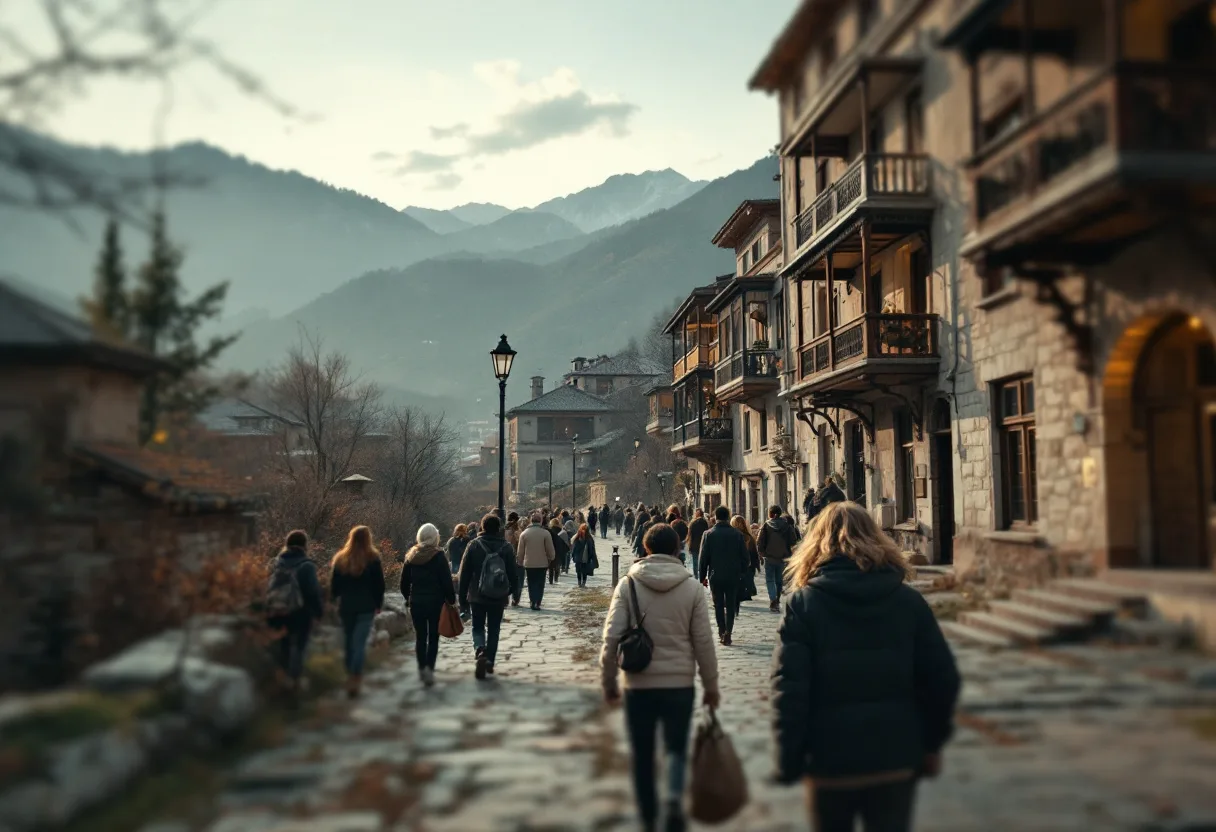
Where you can realistically study: private universities in Tbilisi
| University | Fields of study | Language of instruction | Cost / year (2026) | Notes |
|---|---|---|---|---|
| Free University of Tbilisi | Business, law, IT, social sciences | English, Georgian | 4,500–7,000 USD | Western model, strong career centre, highly competitive admissions |
| Caucasus University | MBA, law, IT, tourism | English, Georgian | 4 000–6 500 USD | EU/US school partnerships, strong alumni network |
| American University in the Caucasus (AUC) | Business, international relations | English | 6,000–9,000 USD | Degree recognised in the US, competitive admissions |
| Georgian American University (GAU) | Law, business, IT | English | 3,500–6,000 USD | Compact campus, many international students |
| University of Georgia (UG) | Medicine, business, IT, law | English | $4,000–$8,000 USD | One of the few private medical programmes |
A reference point for 2026/27. Private university fees are noticeably higher than the public sector — that is the price of remaining access. Check exact tuition rates and available places on the programme’s website: demand for private institutions has risen following the closure of state universities.
Colleges in Georgia: what they are and whether Russian-language instruction is available
A college in Georgia is vocational secondary education, not a university. There are around 60 colleges in the country. They teach applied disciplines: culinary arts, hospitality, beauty, automotive electrics, design, programming, nursing, tourism, and construction.
Honest note on the Russian language: Russian-language programmes at Georgian colleges are almost nonexistent. The primary language of instruction is Georgian, with some programmes in English. This is the main disappointment for those searching for «a college in Georgia in Russian»: advertising promises such programmes far more often than they actually exist.
Russian genuinely appears in select degree programmes at universities — not colleges: Russian philology, oil and gas technology, architecture, medicine, dentistry, Caucasian studies, journalism, and computer science. The list is short and changes from year to year.
What to check before paying:
- Accreditation — in the registry of the National Center for Educational Quality Enhancement (NCEQE). In Georgia, institutional accreditation and programme accreditation are separate; a diploma without programme accreditation has no legal standing.
- The language of your specific programme, not the college as a whole. ’The college has Russian’ often just means the admissions office has a Russian speaker.
- College status. If the college is state-run, the same ’citizens first’ logic that applies to universities may extend to it as well. The rule was announced for universities; no separate clarification has been issued for colleges. Ask in writing.
- Diploma recognition back home. A Georgian vocational diploma goes through a separate recognition procedure in Russia and Kazakhstan — find out the requirements in advance if you plan to return.

How to apply as a foreigner: a step-by-step logic
1. Choosing a programme and language. English-language programmes require no Georgian. For Georgian-language programmes, confirmed proficiency is needed — many universities accept the result of an internal placement test.
2. Diploma recognition. A Russian school certificate must be nostrified through NCEQE. The process takes 2–6 weeks and costs approximately 100–150 GEL. It can be submitted in person or through a representative.
3. Language requirements. For English-taught programmes the standard is IELTS 5.5–6.5 or TOEFL iBT 72–90. Some private universities offer their own placement test as an alternative.
4. Application deadlines. The main autumn semester deadline is June–July, with some universities accepting applications through September. Spring intake (February) exists, but fewer programmes are available.
5. Document package. School certificate + nostrification, international passport, language certificate, motivation letter, CV, and sometimes references.
Student visa and residence permit
Russian citizens enter without a visa for up to 365 days. For studies lasting more than a year, a student residence permit is required — applied for at the Civil Registry Agency after enrolment. Required: university contract, proof of payment, proof of accommodation, photo, and a state fee of approximately 210 GEL.
Scholarships and financial support
- **Georgian state grants for foreign nationals have limited quotas, and their future is uncertain following recent reforms as state funding is being redirected toward citizens. Check with NCEQE for the latest information.
- University merit scholarships for a high GPA or strong portfolio — up to 30–50% off at private institutions. This is currently the most effective real lever for reducing costs.
- Erasmus+ — mobility opportunities from the second year of study onwards.
Cost of living for a student in Tbilisi
A room or bed in a private hostel — 250–450 USD/month. Food, transport, and basic expenses — another 300–500 USD. A realistic budget: 600–950 USD/month. Dormitories are scarce and were mostly attached to state universities — don’t count on them at private institutions; budget for rent.
Recognition of a Russian university degree (for master’s programmes)
A Russian bachelor’s degree is recognised through NCEQE. The process takes up to 3 months with a complete package. A specialist degree (5 years) is equated with a master’s, which opens a direct path to PhD programmes at a number of universities.
Common mistakes
1. Relying on last year’s articles about TSU and GTU. The internet is full of guides titled ’how to enrol in a Georgian state university for 2,000 USD.’ From 2026/27 this is no longer relevant — state universities no longer admit foreign students. Check the date of any advice you read.
2. Looking for a ’Russian-language college.’ Russian-language vocational programmes in Georgia are virtually non-existent. If an agent promises otherwise — ask for written confirmation from the college itself, including the programme name.
3. Delaying nostrification. The process takes weeks, and without an NCEQE certificate a university cannot enrol you. Start 2–3 months before the deadline.
4. Expecting to pick up Georgian ’along the way.’ Academic Georgian cannot be mastered over a summer. No language — choose an English-language track from the start.
5. Not checking programme accreditation. University accreditation ≠ programme accreditation. Without the latter, the degree is invalid.
6. Budgeting by the old numbers. A private university costs $4,000–9,000 vs. the previous $2,000–4,500 at a public institution. Add rent instead of a dorm. The annual difference is significant.
What comes next
Paying tuition from Russia is a separate challenge: the university accepts payment only in its own name and on time — miss the deadline and the place is gone. This kind of transfer requires advance planning, with the route chosen to match the amount and the bank.
A certificate with an apostille and certified translation for NCEQE can conveniently be prepared remotely — Enjoy Freedom handles this.
Housing in Tbilisi for the academic year, without a dormitory or local rental history — home.svoy.io.
Guide to applying to university in Tbilisi — free
Language requirements, diploma recognition, student residence permit, and deadlines. Delivered straight to Telegram.
Documents and certificates
Order a document / certificate
The SVOY app — a marketplace for fellow expats
Services, goods, housing, and jobs worldwide. Post your own listing for free.
SVOY SERVICES
We’ll help with that in Tbilisi
These tasks are handled by services within the SVOY ecosystem.
Documents and certificates
Criminal record checks, civil registry documents, school and university certificates from Russia, Belarus, and Ukraine — with apostille and certified translation, remotely. Required for schools, universities, residence permits, and employment.
American online school
A US high school diploma — and the child studies in Russian: grades 1–12, fully online from any country. Homeschool — €700 per year; Online with daily lessons — from €3,150.
Real estate
Property rental and purchase worldwide. Free property search and transaction support.
Frequently asked questions
Can you apply to a Georgian state university in 2026?
No. From the 2026/27 academic year, Georgian state universities stopped admitting new international students — as announced by Education Minister Givi Mikanadze. The country is moving to a ’citizens first’ model: tuition at state universities is becoming free for Georgian citizens. TSU, GTU, Ilia State University, and TSU medical programmes are no longer available for new international applicants. Exceptions are provided by law (bilateral agreements, exchanges).
So where can a foreigner apply in Tbilisi?
Only private universities — 45 out of 64 accredited institutions in Georgia — continue to admit students as before. The main ones: Free University (4,500–7,000 USD/year), Caucasus University (4,000–6,500), American University of the Caucasus (6,000–9,000), Georgian American University (3,500–6,000), University of Georgia (4,000–8,000, including medicine). Prices are higher than the former state-university range of 2,000–4,500 — that is the cost of preserved access.
Are there colleges in Georgia with instruction in Russian?
Practically none. A college in Georgia means vocational secondary education (around 60 colleges covering culinary arts, hospitality, automotive electronics, design, and nursing). The main language of instruction is Georgian, with some programs in English. Russian appears not in colleges but in select university programs: Russian philology, oil and gas technologies, architecture, medicine, dentistry, Caucasian studies, journalism, and computer science. If an agent promises a ’Russian-language college program’ — ask for written confirmation from the college itself.
How much does it cost to study in Tbilisi in 2026?
With public universities closed to new enrolments, expect to pay $3,500–$9,000 USD per year at a private university, depending on the institution and programme. Add living costs: $600–$950/month (room $250–$450, food and transport $300–$500). Private universities rarely offer dormitories — budget for rent. The main way to reduce costs is through university scholarships for GPA or portfolio, which can reach 30–50%.
How to get a Russian school certificate or degree recognised in Georgia?
Through NCEQE — the National Center for Educational Quality Enhancement. Secondary school certificate: 2–6 weeks, around 100–150 GEL. Bachelor’s degree for master’s admission: up to 3 months. A specialist diploma (5 years) is equated to a master’s degree and opens the path to a PhD. Start 2–3 months before the deadline: without an NCEQE assessment, a university simply cannot enrol you. Documents with apostille and sworn translation can conveniently be prepared remotely through Enjoy Freedom.
Do you need a visa or residence permit to study in Tbilisi?
Russian citizens may enter without a visa for up to 365 days. For studies lasting more than a year, a student residence permit is required — applied for at the Civil Registry Agency after enrolment. Required documents: university contract, proof of payment, proof of accommodation, photo, and a state fee of approximately 210 GEL. The permit is renewed annually for the duration of the study programme.
SVOY ECOSYSTEM
What else you may need
Tasks that most often come next. Each is handled by a dedicated SVOY service.
Rent or buy housing
Rental and purchase Tbilisi: prices by neighbourhood, property due diligence, and end-to-end transaction support — SVOY HOME.
Go to websiteRegularize your status
Residence permits, visas and status renewals in Tbilisi, certificates and apostille — SVOY Legal.
Go to websiteChildbirth and citizenship for the child
Childbirth in Tbilisi: clinics, newborn documentation and citizenship — SVOY Baby.
Go to websiteHalal community
Nikah, halal services, and the Muslim community in Tbilisi — SVOY Halal.
Go to websiteAdmissions in Tbilisi — we’ll go through the documents and timelines
Leave your contact — that’s all we need; we’ll ask the rest ourselves. If you’d like, so we can prepare for the conversation in advance, please specify your request below.
Need help relocating to Tbilisi?
In the international SVOY community you will find:
- Russian-language chat Tbilisi
- Housing and neighbourhoods
- Schools and kindergartens
- Doctors and clinics
- Lawyers and help with paperwork
- Verified contacts and recommendations
If you come with good intentions — you’re one of us.
Join the chat Tbilisi