
Cars & transport in Shanghai
Transport and getting around in Shanghai: what makes more sense — public transport or a car, and how it works with licenses and parking.
Car in Shanghai: with a driver — yes; driving yourself — only with a Chinese licence
China does not recognise Russian or international driving licences: no rental company will hand over a car on that basis, this is the law, not a rule of any particular company. You may only drive yourself with a Chinese license or a temporary Chinese driving permit.
That is why the simplest option is a car with a driver for the hours you need, or an airport transfer: you choose online, and the price is known in advance.
Ad. KG GLOBAL LIMITED. TIN HE399323 · Ad. IT Travel LP. TIN SL024264
Airport transfer in Shanghai: choose a car and price online
Driver with a name sign, price known upfront and unchanged in traffic, 90 minutes of waiting included and free cancellation. Promo code TPO5 — minus 5%.
Browse cars and pricesAd. IT Travel LP. TIN SL024264
Getting around Shanghai: transport options and whether owning a car is worth it
Transport in Shanghai is one of the first challenges facing anyone who moves to the city. Things are not as straightforward as in European or Middle Eastern expat destinations: a car does not automatically solve your mobility problem, and the city’s transport system requires an understanding of several distinct layers — metro, taxis, bike-sharing, and the auction-based licence plate system.
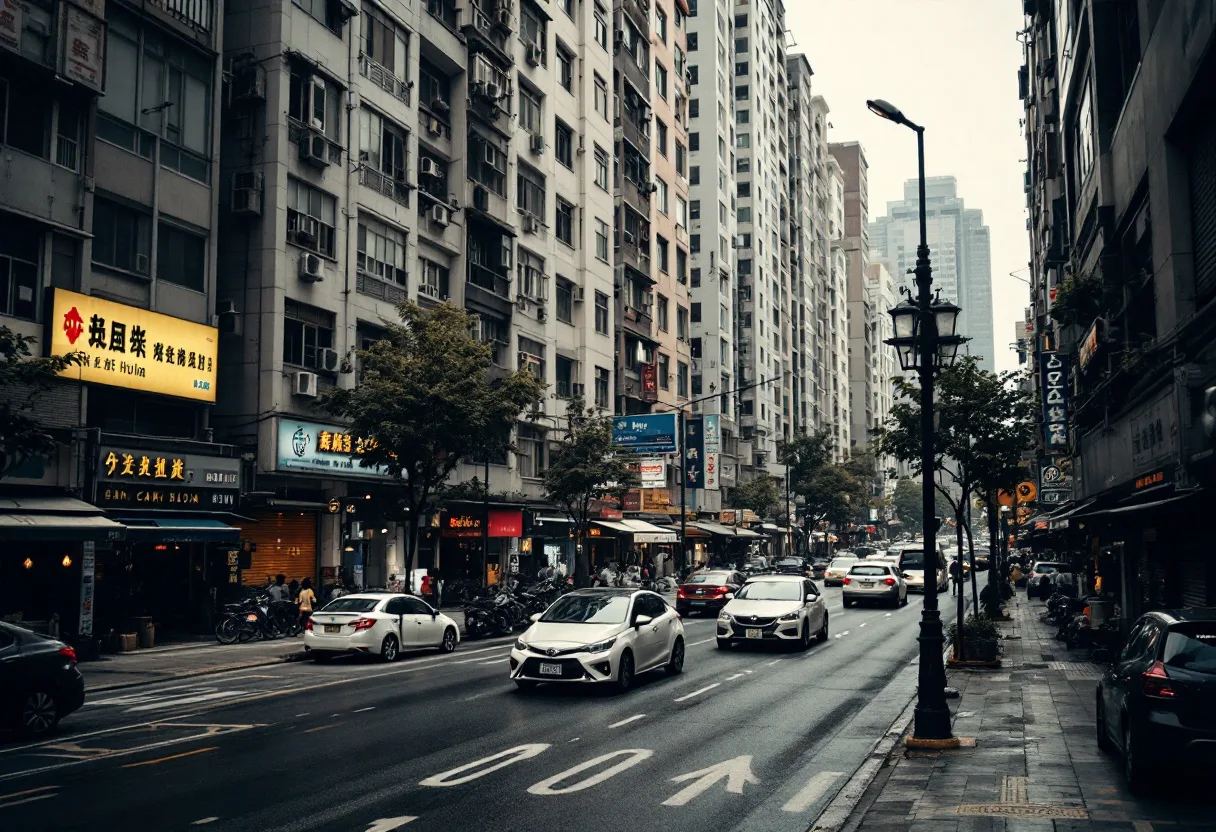
Shanghai Metro: the main way to get around
Shanghai Metro is one of the largest networks in the world: over 20 lines, more than 500 stations, covering everything from Pudong and Hongqiao airports to suburban residential areas on the outskirts. For most expats it is the primary mode of transport on weekdays.
Fare: 4–6 CNY depending on distance. Pay with the Jiaotong Card (a transit card rechargeable at machines) or via Alipay and WeChat Pay using the QR code on the turnstile. For foreigners, the card is the easiest starting point — it works immediately, without linking to a Chinese phone number.
Insider note: during peak hours (07:30–09:00 and 17:30–19:30) on the central lines — 2, 10, 11 — the crush is on a par with Tokyo. If your office is in Pudong and your home is in Jing’an or Changning, budget 40–55 minutes each way in an uncomfortable carriage.
DiDi and ground transport: when the metro doesn’t reach
DiDi — the local equivalent of Uber and effectively the standard for taxi travel in Shanghai. The app is available in English; payment is via WeChat Pay or Alipay. An average city ride: 20–50 CNY; from the centre to the airport: 130–200 CNY.
Yellow taxis (official) are more expensive than DiDi and harder to communicate with: drivers speak almost no English and you need to show them the address in Chinese. DiDi is more convenient in this regard — the route loads automatically.
Shanghai also has a well-developed bike-sharing network: Meituan Bike and Hello Bike cover most residential neighbourhoods. The cost is around 1.5 CNY per 30 minutes, with registration through WeChat. It’s a genuinely practical way to cover the last mile from the metro to the office or a café.
Buses exist, but for an expat without solid Chinese they are practically unusable at first: routes are complex and announcements are in Mandarin only.
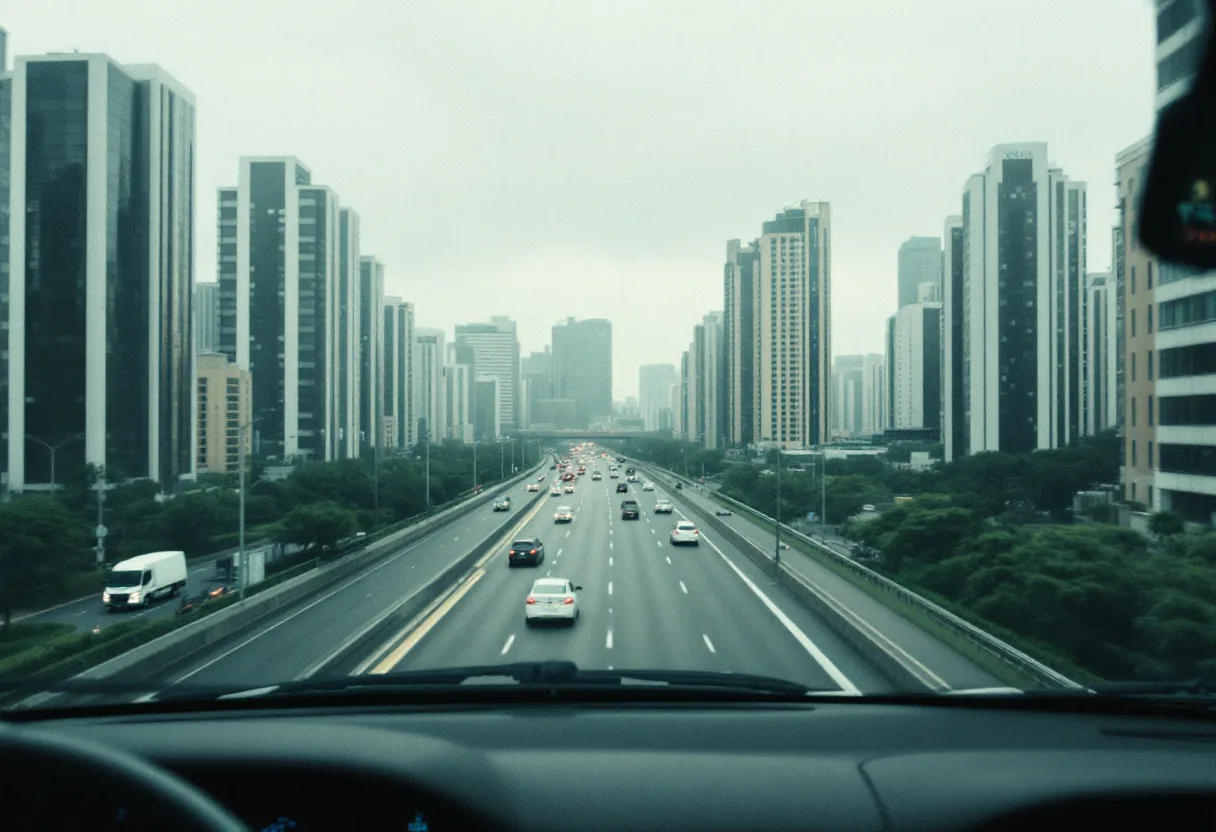
Cars in Shanghai: auctions, prices, and real alternatives
Buying a car in Shanghai runs into a structural barrier: the city licence plate (沪牌, hù pái) is not issued together with the vehicle. Shanghai is one of the few cities in China with an auction system — plates are allocated monthly, and in 2025–2026 the price per lot is 90,000–100,000 CNY (around 12,000–14,000 USD). Taking part in the auction requires registration with a local ID or permanent residence permit, which is not directly accessible to most expats.
An alternative — Jiangsu or Zhejiang province plates: a car with out-of-city plates may enter central Shanghai, but with restrictions on hours and zones (the restriction system changes periodically — check the current SMGA regulations). Some expats register a vehicle through a local legal entity — a lawful but administratively complex route.
If you do need a car, buying one in Shanghai on the secondary market is entirely possible through platforms such as 懂车帝 (Dǒng Chē Dì) or 瓜子二手车. Prices for used sedans start from 60,000 CNY; new BYD and NIO electric vehicles from 80,000 CNY. Without a licence plate sorted out, however, the purchase loses much of its point.
Comparing transportation options in Shanghai
| Option | Best for | Cost | Key note |
|---|---|---|---|
| Metro | Everyone living along the lines | 4–6 CNY/ride | Crowded at peak hours, limited suburban coverage |
| DiDi | Everyone | 20–200 CNY / ride | Requires WeChat/Alipay |
| Bike-share | Residents of dense urban areas | ~1.5 CNY / 30 min | Does not work in rain or suburbs |
| Shanghai plates | Families, frequent trips out of the city | 90,000–100,000 CNY for plates | Auction required, access restricted for foreigners |
| Out-of-city plates | Expats with their own car | No auction needed | Restrictions on entering the centre |
Driver’s licence in Shanghai: what Russian speakers need to know
Russian driving licences are not recognized in China — neither an international driving permit nor the original licence. To legally drive a car, you must obtain a Chinese driving licence.
Procedure for a foreigner with a valid visa or residence permit:
- Have your Russian driving licence translated into Chinese by a certified translator.
- Have the translation notarised (notaries who work with foreign documents — there are several in Shanghai’s Jing’an and Huangpu districts).
- Undergo a medical examination at an authorised facility.
- Pass the written Chinese traffic rules exam — 100 questions, 90 points required to pass. The test is available in Russian at select DMV offices (车管所, chēguǎnsuǒ).
- Obtain a license at the local transportation authority office.
The entire procedure takes 2–4 weeks when there are no queues. Translation and notary costs run 500–1,200 CNY depending on the bureau. The exam itself costs around 200 CNY including fees.
An insider detail: Russian driving licence Shanghai is a common search query, but few people know that the Russian-language test is not available at every branch. Check in advance which 车管所 has a Russian version — not all centres offer it, despite its official existence.
Common mistakes
-
Counting on an international driving permit. It is not valid in China — this is not Europe or the UAE. Driving on one is illegal from day one.
-
Buying a car before sorting out the licence plates. A car without plates is just metal sitting in the yard. The right order is: plates first (or at least a clear plan for getting them), car second.
-
Ignoring plate-based zone restrictions for out-of-city vehicles. The restrictions change, and fines are recorded automatically by cameras. Check the current status before buying a car with non-Shanghai plates.
-
Expecting to pay for transport with a Visa/Mastercard. The metro and DiDi require Alipay or WeChat Pay. Setting up these apps as a foreigner takes time — do it in your first few days after arriving.
-
Taking the driving test at the nearest 车管所 without checking whether a Russian-language test is available. You may end up sitting it in Chinese — a fundamentally different level of difficulty.
-
Underestimating commute times when renting. Shanghai is enormous: a 40-minute metro ride during rush hour can stretch to 70–80 minutes once you factor in transfers and platform waits. Map distances are deceptive.
Practical takeaway
Most expats in Shanghai don’t need a car — especially in the first year. The metro plus DiDi covers 95% of needs. A car becomes justifiable if you have a family, make frequent trips to the suburbs of Jiangsu or Zhejiang province, or your work requires it. In that case: get your licence first, then sort the licence plate, then buy. Doing it in reverse order is costly and stressful.
Guide to renting a car in Shanghai — free
Deposit, insurance, and the deductible: how not to lose money on return. Straight to Telegram.
Car in Shanghai and airport pickup — we will arrange everything
Monthly and longer-term rental, purchase with document verification, airport transfer with vehicle and price selection online. The search is free — just share your budget and timeline.
Submit a requestFind you a car
Rental and purchase, pre-transaction verification
Online transfer
The car and price from the airport — right on the website
Not a fan of bots — write to a person
The SVOY app — a marketplace for fellow expats
Services, goods, housing, and jobs worldwide. Post your own listing for free.
SVOY SERVICES
We’ll help with that in Shanghai
These tasks are handled by services within the SVOY ecosystem.
Car
Car rental and purchase, as well as transfers anywhere in the world.
SVOY ECOSYSTEM
What else you may need
Tasks that most often come next. Each is handled by a dedicated SVOY service.
Rent or buy housing
Rental and purchase Shanghai: prices by neighbourhood, property due diligence, and end-to-end transaction support — SVOY HOME.
Go to websiteRegularize your status
Residence permits, visas and status renewals in Shanghai, certificates and apostille — SVOY Legal.
Go to websiteChildbirth and citizenship for the child
Childbirth in Shanghai: clinics, newborn documentation and citizenship — SVOY Baby.
Go to websiteHalal community
Nikah, halal services, and the Muslim community in Shanghai — SVOY Halal.
Go to websiteCars & transfers in Shanghai — we’ll match it to your route and budget
Leave your contact — that’s all we need; we’ll ask the rest ourselves. If you’d like, so we can prepare for the conversation in advance, please specify your request below.
Need help relocating to Shanghai?
In the international SVOY community you will find:
- Russian-language chat Shanghai
- Housing and neighbourhoods
- Schools and kindergartens
- Doctors and clinics
- Lawyers and help with paperwork
- Verified contacts and recommendations
If you come with good intentions — you’re one of us.
Join the chat Shanghai