
Cars & transport in Warsaw
Transport and getting around in Warsaw: what makes more sense — public transport or a car, and how it works with licenses and parking.
Car rental in Warsaw: choose and book online
Catalogue of local rental cars in Russian: photos, full price for all days upfront, filters for ’no deposit’ and ’no credit card required’. Found what you want — book it instantly online.
Browse cars and pricesAd. Renot Software OU. TIN 12352497
Airport transfer in Warsaw: choose a car and price online
Driver with a name sign, price known upfront and unchanged in traffic, 90 minutes of waiting included and free cancellation. Promo code TPO5 — minus 5%.
Browse cars and pricesAd. IT Travel LP. TIN SL024264
How transport in Warsaw works: everything you need to know before you move
A city’s transport system directly affects where you’ll live, how much you’ll spend commuting, and whether you need a car at all. Warsaw is one of the few major cities in Eastern Europe where you can live quite comfortably without one — yet owning a car is both practical and straightforward. For Russian speakers who relocated here after 2022, the topics of cars in Warsaw and driving licences in Warsaw are particularly pressing: the rules for exchanging, registering, and buying a vehicle have their own nuances.
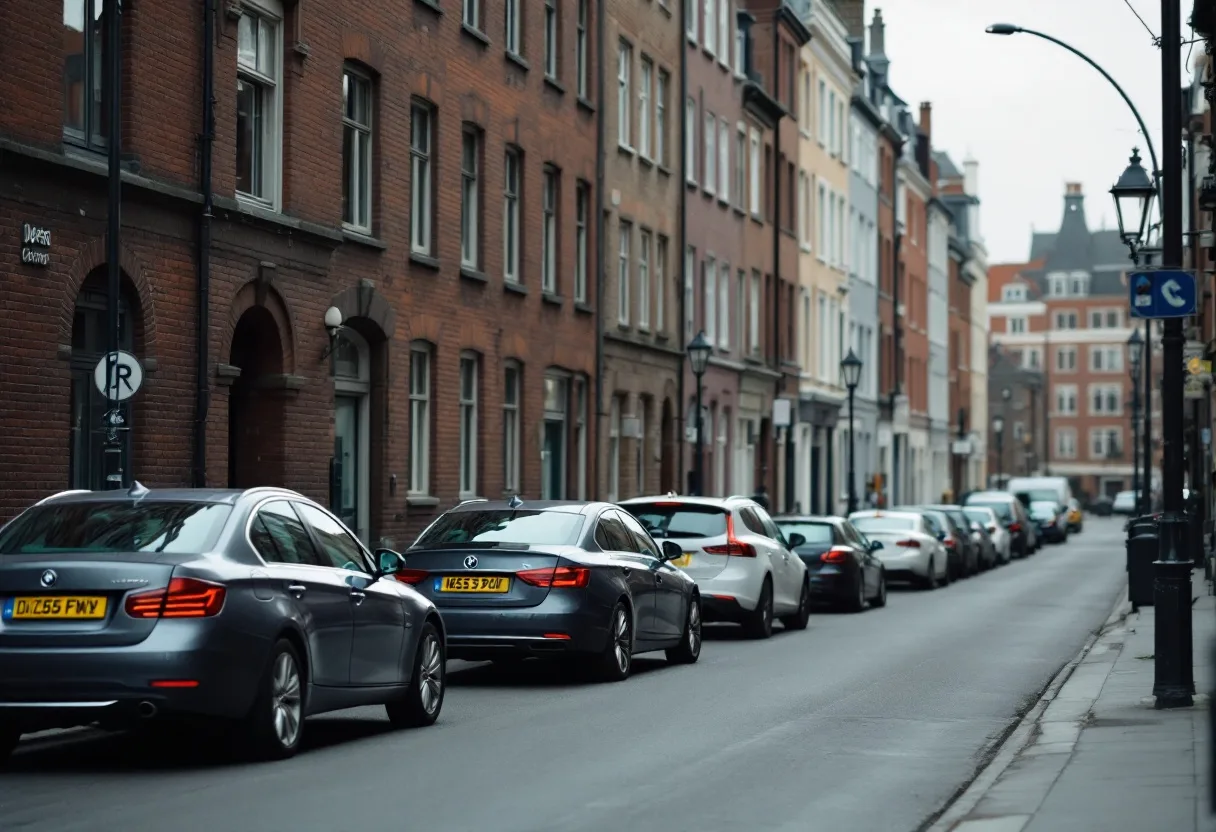
Warsaw public transport: metro, trams, buses
Warsaw Metro consists of two lines — M1 (north–south, 21 stations) and M2 (west–east, 19 stations). The lines intersect at Świętokrzyska station — the city’s transport hub. M1 covers Mokotów, the Centre, and Żoliborz; M2 connects Wola, Praga, and Targówek. The metro runs from ~5:00 to ~01:00, with peak-hour intervals of 3–4 minutes. Mobile signal is available in carriages almost everywhere.
The surface network consists of trams (around 30 routes) and buses (around 180 routes). Night buses run every 30 minutes and cover most of the city — important if you live outside the centre.
The ticketing system is unified — ZTM Warszawa:
- Single ticket: 4.40 PLN (20 minutes), 5.20 PLN (75 minutes).
- Day pass: 15.00 PLN.
- Monthly unlimited: around 110–115 PLN (with a Warszawska Karta Miejska card).
Payment — via the moBILET app, Jakdojade (navigation), or by card directly on the bus or tram. Getting a Karta miejska in your first few weeks is worthwhile — it also works as a library card and gives you discounts.
Suburban transport: SKM and KM
If you live in the suburbs — Pruszków, Legionowo, Otwock, Piaseczno — commuter trains are indispensable. Operators SKM (Szybka Kolej Miejska) and KM (Koleje Mazowieckie) connect Warsaw with the wider metropolitan area. Key interchange hubs are Warszawa Centralna, Warszawa Zachodnia, and Warszawa Wschodnia.
An SKM ticket within Zone 1 costs 4.40 PLN and is compatible with the ZTM travel card — a useful insider tip: a single pass covers the metro, trams, and SKM within the city zones.
Uber and Free Now also operate here — prices are comparable to Moscow in 2021 or even cheaper off-peak. An average city ride costs 15–25 PLN.
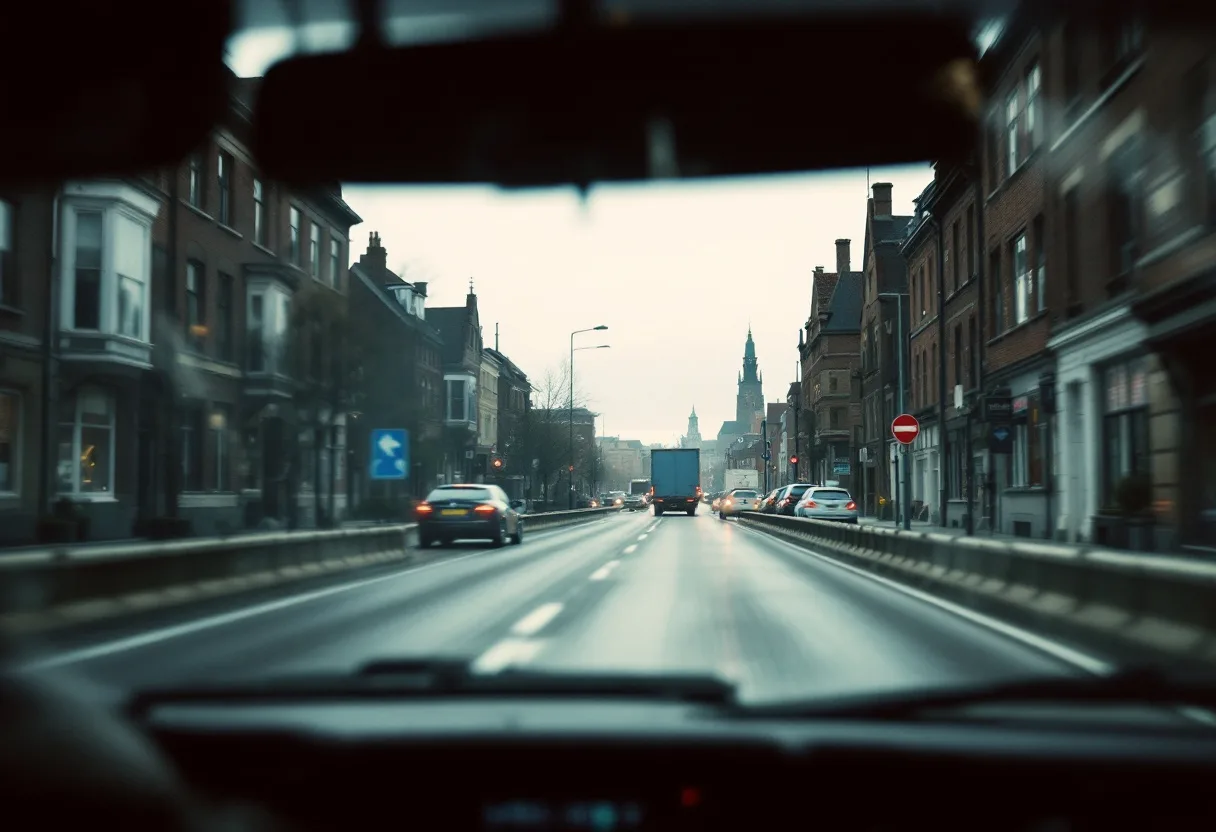
Buying a car in Warsaw: market, prices, registration
Poland’s used-car market is active. The main platforms are — not OtoDom.pl, but OtoMoto.pl — the country’s largest automotive marketplace — along with Allegro and AutoTrader PL. Actual prices for 2026:
| Vehicle class | Example | Price (PLN) | Detail |
|---|---|---|---|
| Budget hatchback | VW Polo, Skoda Fabia 2015–2017 | 18,000–28,000 | Many imported from Germany, check the mileage |
| Family estate | VW Passat, Toyota Avensis 2016–2019 | 35,000–55,000 | Popular with the diaspora, easy to resell |
| Compact SUV | Hyundai Tucson, Nissan Qashqai 2018–2020 | 65,000–95,000 | Best all-round balance |
| Electric vehicle | Nissan Leaf, VW ID.3 | 55,000–110,000 | Subsidies in 2025–2026 are limited |
After purchase, mandatory registration at the Wydział Komunikacji (transport department of the district office) within 30 days. Required: proof of residency (karta pobytu or visa), purchase agreement, vehicle registration document (dowód rejestracyjny), and OC insurance (mandatory third-party liability, approximately 600–1,200 PLN/year for an average car).
Insider note: cars imported from Germany often have rolled-back odometers. Always order a check through autovin.pl or carvertical.com — it costs 50–100 PLN and can save you tens of thousands.
Driver’s licence in Warsaw: exchanging Russian and Belarusian licences
Here is the good news that contradicts a common myth: Russian and Belarusian driving licenses can be exchanged in Poland — with no exams required. Russia and Belarus are parties to the Vienna Convention on Road Traffic, and Polish rules only require a theory exam for licenses that do not conform to the Vienna or Geneva Convention standard. Russian-format licenses do conform, so the exchange is handled through documentation alone.
A practical path:
- Temporarily — a Russian licence is valid for driving in Poland for up to 185 days from the date of obtaining Polish residency (karta pobytu). After that, a Polish licence is formally required.
- Exchange (wymiana): submit an application at the urząd (in Warsaw — Wydział Spraw Obywatelskich), attaching your international passport, residence card, original licence, and a sworn translation (tłumaczenie przysięgłe). No exam is required. You may exchange your licence after 185 days of residence in Poland.
- A full course at a driving school (theory + driving lessons, 2,500–3,500 PLN, plus the WORD exam at around 200 PLN per attempt) is only required for those who have no licence at all or whose document does not conform to the convention standard.
- The theory exam can be taken in English — this is a real and available option. Russian is not offered at WORD.
- Some driving schools in Warsaw have instructors who speak Russian or Ukrainian — search for them in Russian-language Telegram chats using the keyword “driving school” (автошкола).
Bicycles and micromobility
Veturilo — the city’s bike-share system, operating from April to November. More than 350 stations and over 4,600 bikes. The first 20 minutes are free with a seasonal pass (~20 PLN/year). Electric scooters — Bolt, Lime, Dott — are available year-round, at roughly 0.75–1.00 PLN per minute.
Common mistakes
- Going to a driving school and starting from scratch without checking the exchange option. The most expensive mistake: people pay 2,500–3,500 PLN for a course when a simple document-based wymiana exchange — no exam required — would have sufficed. Check the wymiana procedure first, and only sign up for driving school if it doesn’t apply to you.
- Driving on a Russian licence for more than 185 days after receiving a residence permit. This is technically a violation — during a check or accident, the consequences can be serious.
- Buying a car without checking its history — a significant share of vehicles on the Polish market have passed through Germany with tampered odometers.
- Failing to register a vehicle on time — late registration fines start at 500 PLN and can reach 1,000 PLN.
- Ignoring the paid parking zone (Strefa Płatnego Parkowania, SPP) in the city centre. The zone expanded in 2024–2025, and many areas that were previously free now require payment. The fine is 250 PLN.
- Buying a monthly transit pass too late — many people spend their first 2–3 months paying per ride, spending 2–2.5 times more than necessary.
- Not checking insurance compatibility when changing ownership — the previous owner’s insurance does not automatically transfer to the new conditions, even if it is formally listed on the vehicle.
What works for whom
If you live in Mokotów, Wola, Żoliborz, or Praga-Północ — a car is not essential: the metro, trams, and Uber cover 90% of your needs. If you have a family, children, travel outside the city often, or live in the suburbs — a car is justified, and the Polish market offers good options in the 35,000–70,000 PLN range. You will need a Polish driving licence — it is best to start the process within the first six months, without putting it off.
Guide to renting a car in Warsaw — free
Deposit, insurance, and the deductible: how not to lose money on return. Straight to Telegram.
Car in Warsaw and airport pickup — we will arrange everything
Monthly and longer-term rental, purchase with document verification, airport transfer with vehicle and price selection online. The search is free — just share your budget and timeline.
Submit a requestFind you a car
Rental and purchase, pre-transaction verification
Online transfer
The car and price from the airport — right on the website
Not a fan of bots — write to a person
The SVOY app — a marketplace for fellow expats
Services, goods, housing, and jobs worldwide. Post your own listing for free.
SVOY SERVICES
We’ll help with that in Warsaw
These tasks are handled by services within the SVOY ecosystem.
Car
Car rental and purchase, as well as transfers anywhere in the world.
SVOY ECOSYSTEM
What else you may need
Tasks that most often come next. Each is handled by a dedicated SVOY service.
Rent or buy housing
Rental and purchase Warsaw: prices by neighbourhood, property due diligence, and end-to-end transaction support — SVOY HOME.
Go to websiteRegularize your status
Residence permits, visas and status renewals in Warsaw, certificates and apostille — SVOY Legal.
Go to websiteChildbirth and citizenship for the child
Childbirth in Warsaw: clinics, newborn documentation and citizenship — SVOY Baby.
Go to websiteHalal community
Nikah, halal services, and the Muslim community in Warsaw — SVOY Halal.
Go to websiteCars & transfers in Warsaw — we’ll match it to your route and budget
Leave your contact — that’s all we need; we’ll ask the rest ourselves. If you’d like, so we can prepare for the conversation in advance, please specify your request below.
Need help relocating to Warsaw?
In the international SVOY community you will find:
- Russian-language chat Warsaw
- Housing and neighbourhoods
- Schools and kindergartens
- Doctors and clinics
- Lawyers and help with paperwork
- Verified contacts and recommendations
If you come with good intentions — you’re one of us.
Join the chat Warsaw