
Healthcare in Warsaw
Health and medicine in Warsaw: how insurance works, where to go and how to find a Russian-speaking doctor.
How healthcare in Warsaw works for Russian speakers
Warsaw is one of the few European cities where a Russian-speaking expat can build a complete medical setup fairly quickly: find a doctor, arrange insurance, and get an appointment without waiting months. But Poland’s healthcare system works differently from Russia’s or other CIS countries’, and without understanding its logic it is easy to waste money — or worse, find yourself without help when you need it most.
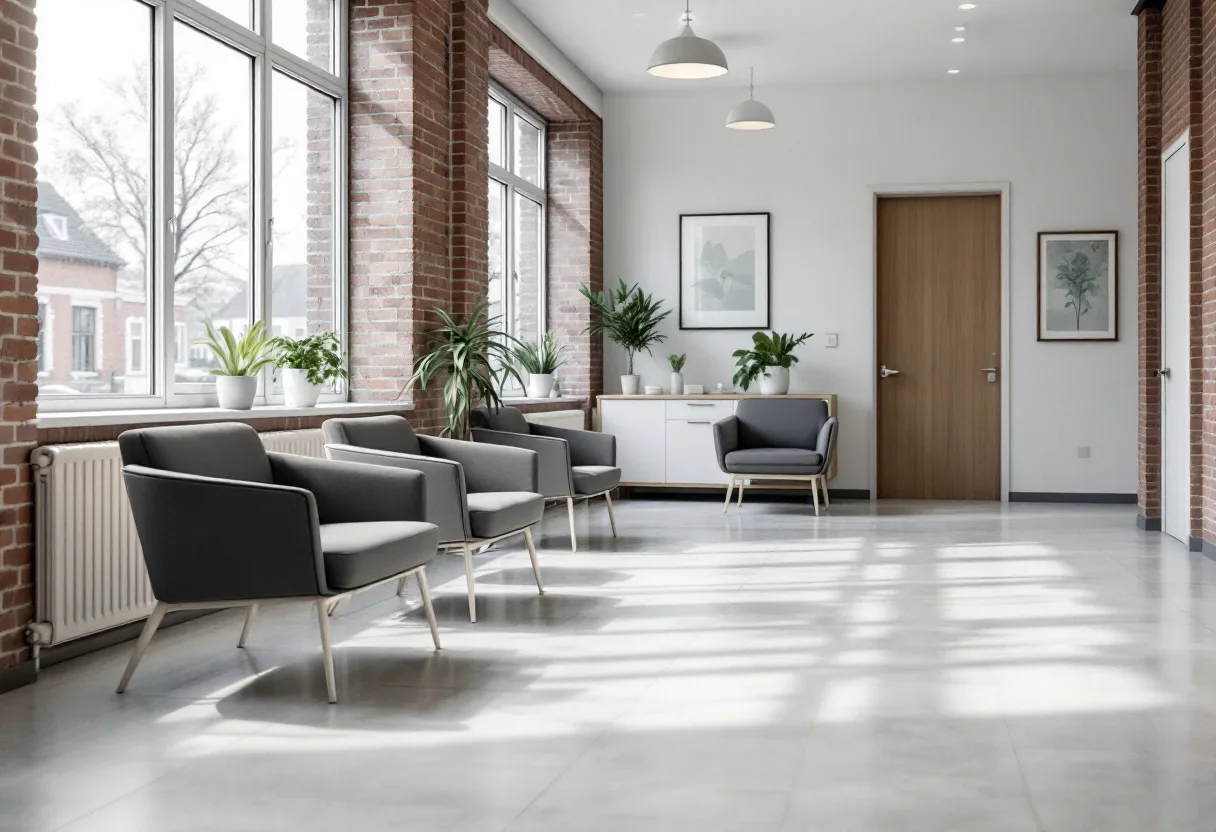
State health insurance NFZ: what it is and who qualifies
NFZ (Narodowy Fundusz Zdrowia) is the Polish equivalent of public health insurance. NFZ contributions are deducted automatically from your salary when you are formally employed. If you work under an umowa o pracę (employment contract) or are registered as a JDG (sole trader), you are covered.
What NFZ covers:
- Visits to a GP (lekarz pierwszego kontaktu, POZ)
- Referrals to specialists
- Hospitalization and emergency care
- Most tests and procedures by referral
The main pitfall of NFZ is waiting times for specialists. Seeing a cardiologist or an orthopaedic surgeon through the public programme can take 2 to 6 months. This is the norm, not the exception. That is why most Russian-speaking residents of Warsaw use NFZ as a safety net and rely on a private clinic for everyday needs.
If you have just arrived and are not yet employed — NFZ does not apply to you. During this period, the only options are paid medical services or a separate commercial insurance policy.
Private clinics in Warsaw: LuxMed, Medicover, and others
The two main players in Warsaw’s private healthcare market are LuxMed and Medicover. Both operate on a subscription basis and see patients without referrals or queues — appointments are typically available the next day or the day after.
LuxMed — an extensive network with clinics in most parts of the city, including Mokotów, Żoliborz, and Ursynów. An individual subscription runs from 150 to 350 PLN per month depending on the plan. Corporate packages are cheaper — employers often include LuxMed or Medicover in their benefits package.
Medicover offers a somewhat higher level of service at select locations and provides packages that include diagnostics, dental care, and rehabilitation. The basic package starts at 130 PLN/month; an extended package with diagnostics runs 250–400 PLN.
Beyond these two, Warsaw has independent private clinics and diagnostic centres — for example, Enel-Med and Carolina Medical Center (specialising in sports medicine and orthopaedics). A one-off specialist visit at a private clinic without a subscription costs 150–300 PLN.
| Option | Best for | Cost | Key note |
|---|---|---|---|
| NFZ (through employment) | Formally employed workers | Included in taxes | Waiting times for specialists up to 6 months |
| LuxMed subscription | Families, freelancers | from 150 PLN/month | Clinics across the city |
| Medicover subscription | IT professionals, corporate employees | from 130 PLN/month | Often included in the benefits package |
| Pay-per-visit appointment | Tourists, recent arrivals | 150–300 PLN/visit | Walk-in at the desk costs more |
| Commercial insurance policy | Unemployed, students | from 80–150 PLN/month | Required for initial legalisation |

A Russian-speaking doctor in Warsaw: where to look
The query “Russian-speaking doctor Warsaw” is one of the most frequent in the city’s Russian-language chats, and for good reason — a language barrier in medicine poses a real risk. Poland has a significant number of doctors from Ukraine, Belarus, and Russia, some of whom have obtained local qualifications and work within the Polish healthcare system.
Where to look:
- Telegram chats for Warsaw expats — recommendations for specific doctors by specialty appear there regularly
- The portals ZnanyLekarz.pl and Mediconet.pl allow you to filter doctors by the language of consultation, including Russian and Ukrainian
- Polmed clinic and a number of independent centres in the Praha-Północ and Ochota districts — historically where the Ukrainian- and Russian-speaking community tends to concentrate
Key insight: not every doctor with a Russian-sounding surname on ZnanyLekarz actually speaks Russian — some are Polish citizens of the second or third generation. Check the ’languages spoken’ section explicitly.
Dental care in Warsaw
One topic worth highlighting on its own: dentistry in Warsaw is significantly cheaper than in Germany, the Netherlands, or Scandinavia, at comparable quality. A filling costs 200–350 PLN, an implant 3,000–5,000 PLN. NFZ (public health service) dental care exists, but the range of services is very limited and waiting lists are long. Most Warsaw residents — including Poles themselves — see a dentist privately.
Common mistakes
-
Counting on NFZ coverage in the first months without employment. The insurance only activates after you are officially employed or register as a sole trader. Until then you are uninsured — a separate commercial policy is essential.
-
Going directly to a specialist under NFZ without a GP referral. In most cases this is either impossible or means paying out of pocket. Start with POZ, get a GP appointment, then a referral.
-
Not checking the consultation language when booking. Not every doctor listed on ZnanyLekarz speaks Russian or English. Make language ability a mandatory filter when booking.
-
Buying a full LuxMed or Medicover subscription without checking coverage first. Basic plans often exclude specialists and diagnostics — MRI, ultrasound, and lab tests may fall under a separate tier.
-
Ignoring Polish pharmacy culture. Polish pharmacies (apteka) are strict about prescription-only medications. Many drugs sold over the counter in Russia require a prescription here. Bringing a package from home and asking for ’the same thing’ won’t work without a prescription from a Polish doctor.
-
Delaying registration with a POZ general practitioner. Getting an appointment with your own GP takes a few days, but without this step you cannot fully access the NFZ system — no referrals, no subsidized tests, no electronic prescriptions.
Practical takeaway
The optimal setup for most Russian speakers in Warsaw: NFZ through an employer as a basic safety net, plus a corporate or personal LuxMed/Medicover subscription for routine visits without queues. If you have just arrived and haven’t started working yet, a minimal commercial policy for the transitional period is essential. To find a Russian-speaking doctor, ZnanyLekarz with a language filter works well — but a final check through community chats is advisable.
Guide to healthcare in Warsaw — free
How to see a doctor, insurance, and Russian-speaking specialists. Delivered straight to Telegram.
Giving birth abroad
Learn more
The SVOY app — a marketplace for fellow expats
Services, goods, housing, and jobs worldwide. Post your own listing for free.
SVOY SERVICES
We’ll help with that in Warsaw
These tasks are handled by services within the SVOY ecosystem.
Giving birth abroad
Giving birth abroad and second citizenship for the child — country and clinic selection, documents and full support.
Documents and certificates
Criminal record checks, civil registry documents, school and university certificates from Russia, Belarus, and Ukraine — with apostille and certified translation, remotely. Required for schools, universities, residence permits, and employment.
SVOY ECOSYSTEM
What else you may need
Tasks that most often come next. Each is handled by a dedicated SVOY service.
Rent or buy housing
Rental and purchase Warsaw: prices by neighbourhood, property due diligence, and end-to-end transaction support — SVOY HOME.
Go to websiteRegularize your status
Residence permits, visas and status renewals in Warsaw, certificates and apostille — SVOY Legal.
Go to websiteChildbirth and citizenship for the child
Childbirth in Warsaw: clinics, newborn documentation and citizenship — SVOY Baby.
Go to websiteHalal community
Nikah, halal services, and the Muslim community in Warsaw — SVOY Halal.
Go to websiteInsurance, certificates, and apostille in Warsaw — we’ll work out what you need
Leave your contact — that’s all we need; we’ll ask the rest ourselves. If you’d like, so we can prepare for the conversation in advance, please specify your request below.
Need help relocating to Warsaw?
In the international SVOY community you will find:
- Russian-language chat Warsaw
- Housing and neighbourhoods
- Schools and kindergartens
- Doctors and clinics
- Lawyers and help with paperwork
- Verified contacts and recommendations
If you come with good intentions — you’re one of us.
Join the chat Warsaw