
Documents and certificates in Vancouver
Getting legal status in Vancouver: which documents and statuses Russian speakers need and where to begin.
How to get a residence permit in Vancouver: pathways, documents, and realistic timelines
Vancouver is one of the few cities in North America where the immigration system genuinely works in favour of a skilled professional or family. But the window of opportunity has narrowed considerably over the past two years, and outdated guides are more dangerous here than having none at all. Under the Immigration Levels Plan 2026–2028, Canada accepts 380,000 permanent residents per year (not 400,000+, as before 2024), and British Columbia’s provincial nomination quota has been cut to 5,254 places for 2026 — down from roughly 8,000 in previous years. The province also completely rewrote its programme in April 2026. Choosing the wrong pathway, or targeting a closed stream, costs months of waiting. Below is a practical map for those who are actually making the move.

Main entry and legalisation routes in Vancouver
For most Russian speakers relocating to Vancouver, there are four workable routes.
Work Permit — the most common first step. Divided into two types:
- LMIA-based (Labour Market Impact Assessment): the employer must demonstrate they could not find a suitable Canadian candidate. The process takes 2 to 5 months, but results in a closed Work Permit tied to that specific employer.
- LMIA-exempt: falls under international agreements or intra-company transfers (ICT). Processing takes from 2 weeks to 2 months.
Student Visa (Study Permit) — the route for those pursuing legalization through education. After completing a program of 2+ years, graduates receive a PGWP (Post-Graduation Work Permit) for up to 3 years — an open permit, meaning you can change employers freely.
BC PNP (British Columbia Provincial Nominee Program) — a provincial nomination stream. From April 23, 2026, the program has been fundamentally restructured — and that is the most important thing to know: invitations are now issued under only three provincial priorities — Care (healthcare, caregiving, early childhood education, veterinary medicine — 31 medical occupations plus related roles), Build (nine construction trades with an active SkilledTradesBC certificate), and Innovate (highly skilled, well-compensated roles with measurable economic impact).
What is closed and no longer exists, even though older articles still mention it:
- Tech / Priority Technology Occupations — dedicated tech draws no longer exist (the last one was held in December 2024);
- International Graduate / International Post-Graduate — closed; the student pathways announced as replacements have not been launched;
- Entry Level and Semi-Skilled (ELSS) — closed.
Formally, Skilled Worker and Health Authority streams have been retained, but selection has become targeted: meeting the criteria is not enough — an invitation is issued only if your occupation falls within the current priority list. A separate quota applies: 35% of nominations are reserved for candidates working outside Greater Vancouver. The application fee from 22 January 2026 is CAD 1,750 (previously 1,475). Nomination still accelerates the path to PR through Express Entry.
Refugee / Protected Person — a separate pathway outside the competitive draw. Relevant for those who arrived on humanitarian grounds. IRCC issues an initial decision in an average of 21 months.
Express Entry and BC PNP: how the PR selection process works
Express Entry — the main federal mechanism for obtaining permanent residence. The system assigns CRS points (Comprehensive Ranking System) based on age, education, work experience, language proficiency, and whether you hold a job offer or a provincial nomination.
A key insight: a BC PNP provincial nomination automatically adds 600 CRS points, which effectively guarantees an Invitation to Apply (ITA) for PR regardless of your base score.
The second working mechanism is category-based draws, where IRCC invites candidates not by overall score but by profile. The 2026 categories are: French language, healthcare and social services, STEM, trades, education, physicians with Canadian experience, senior managers with Canadian experience, and researchers and military specialists. Thresholds in these draws are noticeably lower than the general pool: for example, the French-language draw on July 9, 2026 cleared at CRS 420, senior managers on July 10 at 392, while healthcare cutoffs held in the 462–510 range.
The practical takeaway: for an IT specialist without a nomination, betting on ’accumulating enough points to clear the general draw’ is today a weaker strategy than targeting the right category or learning French — category-based draws offer a real shot even at a mid-range score.
PR processing times after ITA submission: 6–12 months in the standard scenario. Citizenship — after 3 of 5 years as a permanent resident (physical presence in Canada required).
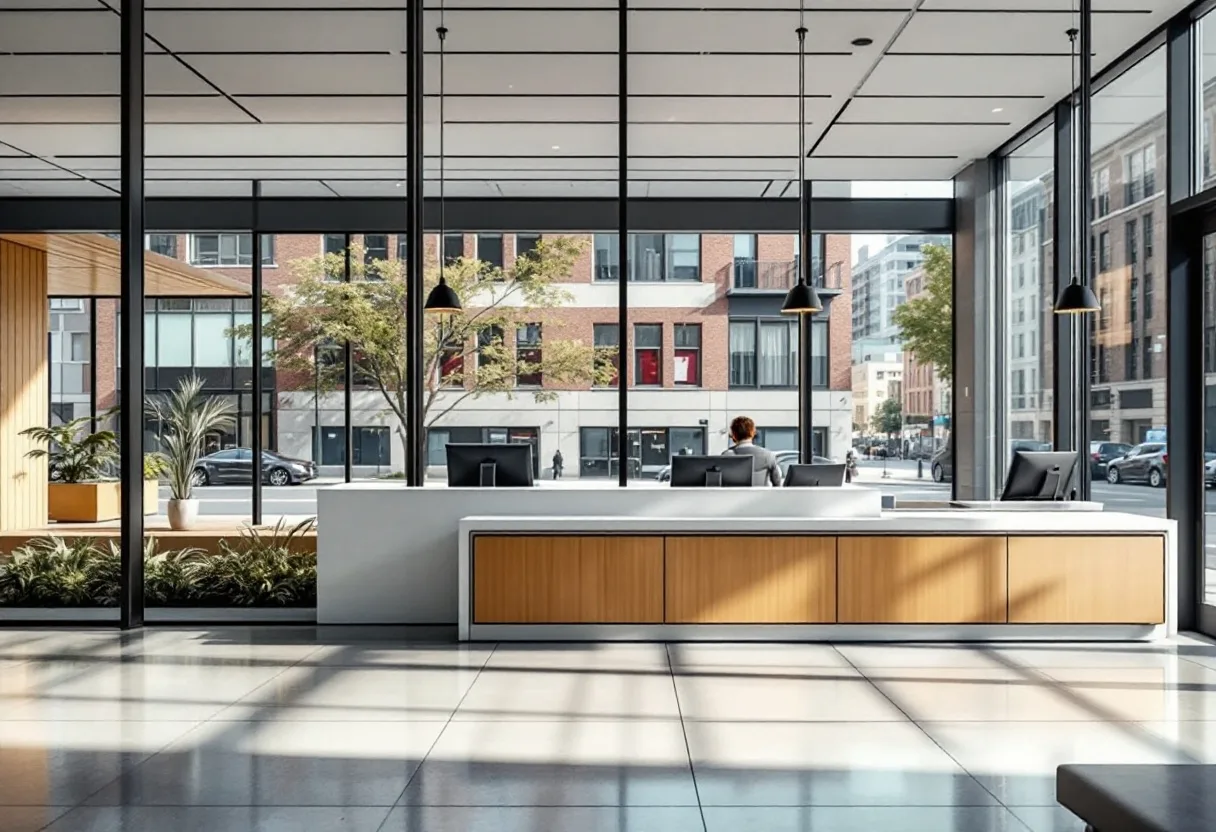
First documents after arriving in Vancouver
Regardless of immigration status, three key documents must be obtained immediately upon arrival. Without them, opening a bank account, finding employment, or accessing insured medical care is impossible.
| Document | Where to obtain | Processing time | Notes |
|---|---|---|---|
| SIN (Social Insurance Number) | Service Canada (in-person or online) | 1–3 business days | Any status with work authorization required; without a SIN an employer cannot process payroll |
| MSP (BC Medical Services Plan) | HIBC / online via gov.bc.ca | Activates after a 3-month waiting period | Private insurance is mandatory for the first 3 months (~CAD 80–150/month) |
| BC driver’s licence | ICBC Driver Licensing Office | Several weeks (written test + road test, queue for road test) | You may drive on a foreign licence for 90 days after moving. However, there is no exchange process for Russian licences: BC has no agreement with Russia, so you must pass the knowledge test and road test (see below) |
Insider tip: most newcomers put off enrolling in MSP, counting on their employer’s corporate health insurance. But if the corporate policy only kicks in from the 3rd month of employment and MSP has not yet taken effect, all medical expenses fall entirely on you. The gap between the two policies is a classic trap of the first few months.
One thing rarely covered in standard guides: a SIN starting with the digit 9 is issued to temporary residents. Employers can see this and sometimes draw incorrect conclusions about the stability of the hire. Switching to a permanent SIN happens automatically once you receive PR — it does not require a separate application, but you do need to notify the CRA (Canada’s tax authority) and your employer.
Documents for submission and nostrification
Most IRCC applications will require:
- International passport (valid for the entire processing period plus 6 months)
- Educational diploma with ECA (Educational Credential Assessment) — evaluation through WES or ICAS, cost approx. CAD 200–250, processing time 7–60 business days
- Employment history documents: letters of employment, T4 / pay stubs, or their international equivalents
- Language tests: IELTS General or CELPIP (minimum CLB 7 for most streams)
- Medical examination with an authorized Panel Physician — list available on the IRCC website; cost ~CAD 250–400
Document translation for IRCC: two options are accepted, and they are often confused.
- A translation prepared by a certified translator (a member of a Canadian provincial association or an official body abroad), with stamp and signature. Additional notarization is not required.
- If no certified translator is available — a translation by a non-certified translator plus an affidavit: a written statement by the translator attesting to the accuracy of the translation, sworn before a notary or commissioner of oaths.
What you must never do: translate documents yourself, through a relative, or through your own representative — even if they are qualified. IRCC treats this as a conflict of interest and returns the package. Apostilles are a separate matter: they are affixed to the original or a certified copy and do not replace a translation.
Common mistakes
-
Filing a Work Permit without verifying the NOC code. The job title in the application must match the NOC (National Occupational Classification) exactly. A mismatch means a refusal or a request for additional documents and a loss of 2–4 months.
-
Ignoring the 3-month MSP waiting period. People arrive without private insurance, expecting quick activation — and end up with a CAD 300–800 bill for a single doctor’s visit.
-
ECA through unlicensed services. IRCC only accepts assessments from accredited organizations (WES, ICAS, and a few others). An assessment from a third-party “consultant” will not be accepted — your money and time will be wasted.
-
Counting on a straight licence ’exchange.’ BC only exchanges licences without exams for countries on the reciprocal list (USA, UK, Germany, France, Japan, South Korea, and a few others). Russia and Ukraine are not on this list — a knowledge test and road test are required. You may drive on a foreign licence for the first 90 days after moving; with verified driving experience of 2+ years, ICBC credits it and allows you to go straight to the full Class 5 test, skipping the GLP from scratch. Booking a road test takes weeks — start immediately.
-
Targeting discontinued programmes. The costliest mistake of 2026: people spend months preparing applications for the BC PNP Tech Pilot or the international graduates stream — programmes that no longer exist. Before applying, check the province’s current priorities (Care / Build / Innovate) and the latest Express Entry category draws, not articles from two years ago.
-
Translating documents yourself or having a family member do it. This is the most common — and most frustrating — reason a package is returned: IRCC does not accept translations from the applicant, a family member, or the representative, as this is a conflict of interest, even if the translator is qualified. You need an independent certified translator or an independent translator with an affidavit.
Which path suits whom
If your profession falls under the Care or Build priorities (healthcare, caregiving, early childhood education, nine construction trades) — BC PNP is currently the shortest and most realistic path to PR, especially when working outside Greater Vancouver, where 35% of nominations are reserved.
If you’re an IT professional, the honest assessment is this: there is no longer a dedicated technology stream in BC, and counting on one isn’t realistic. Workable options are landing an Innovate role (a high-paying, highly skilled position), going through the federal category-based selection (STEM or French language), or looking at other provinces. Betting exclusively on BC PNP as a tech worker in 2026 is a high-risk strategy.
The general logic remains the same: job offer → Work Permit → Canadian experience → nomination or category-based draw → PR. A realistic timeline from application to PR card is 18–30 months with a well-prepared package.
Guide to documents and residence permits in Vancouver — free
Apostille, sworn translation, submission procedure. Delivered directly in Telegram.
Documents and certificates for living in Vancouver — we’ll handle it remotely
Criminal record checks, civil registry documents, school and university certificates from Russia, Belarus, and Ukraine — with an apostille and a sworn translation, remotely. No need to fly in and arrange a power of attorney: tell us which document and what it’s for — we’ll give you the timeline and price.
Submit a requestNot a fan of bots — write to a person
The SVOY app — a marketplace for fellow expats
Services, goods, housing, and jobs worldwide. Post your own listing for free.
SVOY SERVICES
We’ll help with that in Vancouver
These tasks are handled by services within the SVOY ecosystem.
Documents and certificates
Criminal record checks, civil registry documents, school and university certificates from Russia, Belarus, and Ukraine — with apostille and certified translation, remotely. Required for schools, universities, residence permits, and employment.
Visas
US, Schengen, and Canada visas: selecting the basis, compiling the package, finding a slot, and preparing for the interview. We work from any country.
SVOY ECOSYSTEM
What else you may need
Tasks that most often come next. Each is handled by a dedicated SVOY service.
Rent or buy housing
Rental and purchase Vancouver: prices by neighbourhood, property due diligence, and end-to-end transaction support — SVOY HOME.
Go to websiteRegularize your status
Residence permits, visas and status renewals in Vancouver, certificates and apostille — SVOY Legal.
Go to websiteChildbirth and citizenship for the child
Childbirth in Vancouver: clinics, newborn documentation and citizenship — SVOY Baby.
Go to websiteHalal community
Nikah, halal services, and the Muslim community in Vancouver — SVOY Halal.
Go to websiteDocuments and residence permit in Vancouver — we will tell you what genuinely suits you
Leave your contact — that’s all we need; we’ll ask the rest ourselves. If you’d like, so we can prepare for the conversation in advance, please specify your request below.
Need help relocating to Vancouver?
In the international SVOY community you will find:
- Russian-language chat Vancouver
- Housing and neighbourhoods
- Schools and kindergartens
- Doctors and clinics
- Lawyers and help with paperwork
- Verified contacts and recommendations
If you come with good intentions — you’re one of us.
Join the chat Vancouver