
Safety and SOS in London
Safety in London: who to call in an emergency and where to find Russian-language assistance.
Emergency services and basic safety in London
Relocating to London means changing not just your country but your entire emergency infrastructure. The first few months are particularly vulnerable: you do not yet know who to call, you do not understand how the NHS works in a crisis, and you lose time when time is critical. Knowing the right numbers, how the services are structured, and where to find Russian-language support in London is not paranoia — it is a basic part of any relocation.
Single emergency number: 999
999 — the main emergency number for London and the whole of the United Kingdom. Available 24/7, free of charge, including from a locked phone or one with no credit. Connects you to:
- Metropolitan Police — theft, assault, threat to life
- ambulance (London Ambulance Service) — medical emergencies
- London Fire Brigade — fire, road accidents with casualties, hazardous materials
Another number to know — 112: it works the same as 999 and is accepted throughout the EU, convenient for those who arrived from Europe and reflexively dial the familiar combination.
Insider moment: when calling 999, the operator will immediately ask «Which service?» — answer clearly: police, ambulance, or fire. If you’re unsure, say ambulance — they coordinate with the others. Don’t try to explain everything at once: give the address first, then describe the situation.
For non-emergency police matters, call 101 (e.g., petty theft, a suspicious person). For non-emergency medical questions, call NHS 111 (available 24/7, with an automated symptom assessment).
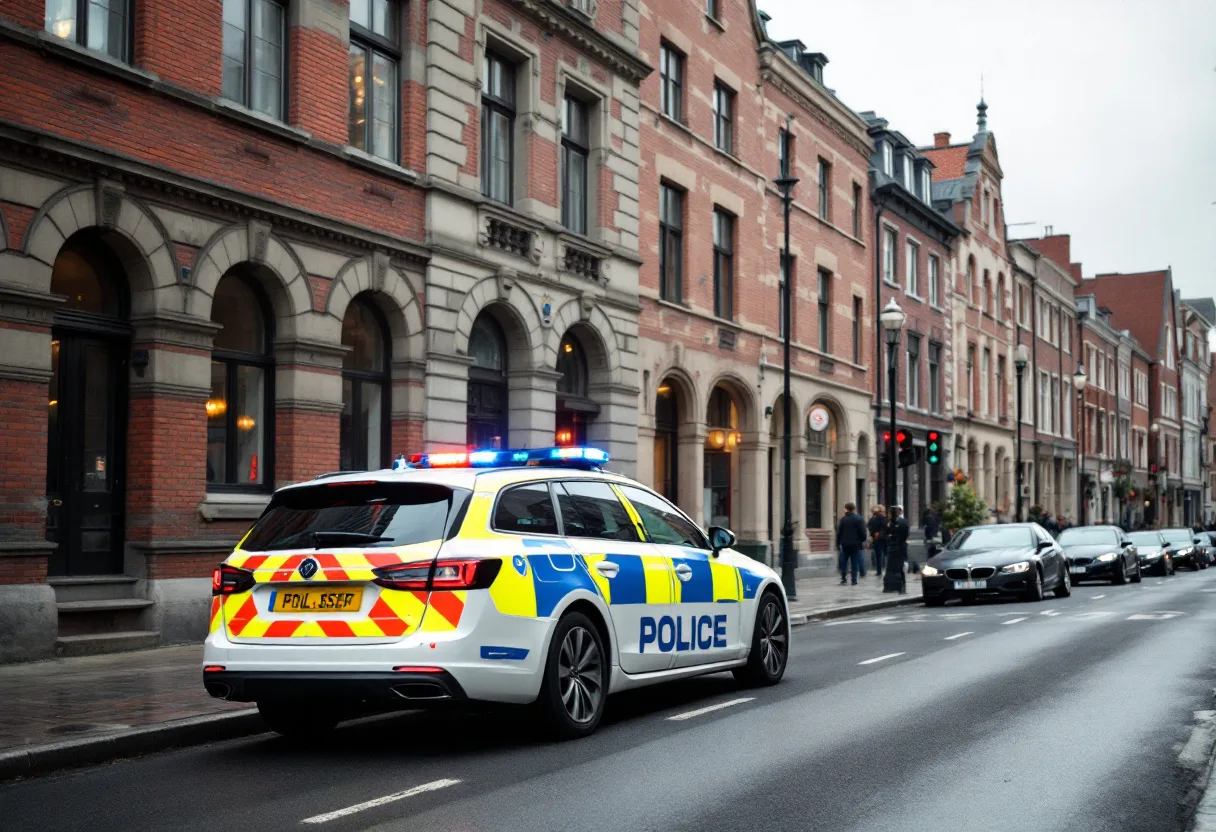
Healthcare in crisis: how the system works
NHS — a free system, but it doesn’t work ’on demand’ while you’re waiting to register. Emergency care through A&E (Accident & Emergency) is available without insurance and without a GP registration — important to know if you haven’t registered yet. The nearest A&E in the centre is King's College Hospital, St Thomas', University College Hospital (UCLH).
If an ambulance takes you to hospital, the ride is free for residents and for those whose documents are being processed. However, tourists and people without legal status may receive a bill after the fact — worth bearing in mind when choosing insurance.
Private insurance (Bupa, AXA Health, Vitality) speeds up access to specialists and removes the language barrier — many clinics provide Russian-speaking coordinators for insured patients.
Russian-language assistance in London: where to turn
One of the most established Russian-speaking communities in Europe is right here in London. Key areas of concentration: Kensington, Chelsea, Hampstead, Canary Wharf, Wembley. This means the support infrastructure here is genuinely in place — you just need to know where to start.
Entry points for Russian speakers in a crisis situation:
- SVOY London chat — your first stop for orientation: legal questions, lost documents, emergency housing search, recommendations for Russian-speaking doctors
- Russian-speaking lawyers — in the event of detention, visa trouble, or a rental dispute, it is important to have a contact ready in advance, not to search for one in the middle of a crisis.
- The Consulate and Embassy of Russia — for Russian citizens in cases of lost passports or other consular emergencies (Notting Hill Gate / Kensington Palace Gardens, 6–7).
Key insight: in London there is a duty solicitor scheme — a lawyer on duty at the police station who must be provided free of charge upon arrest. Request one explicitly, in English: ’I want to speak to a duty solicitor.’ This right applies regardless of nationality.
Neighbourhoods and safety levels: what you need to know
London is generally safe, but uneven. Areas with higher rates of street crime according to Metropolitan Police data include parts of Hackney, Southwark, Lambeth, and Tower Hamlets. This does not mean you cannot live there — but it is worth understanding the context.
| Area | Safety level | Russian-speaking concentration | Notes |
|---|---|---|---|
| Kensington / Chelsea | High | High | Expensive, but peaceful |
| Hampstead | High | Medium | Families, quiet |
| Canary Wharf | High | Average | Business-oriented, security everywhere |
| Wembley | Mid-range | Average | Mixed neighbourhood |
| Hackney (east) | Below average | Low | Increased police monitoring |
| Southwark (certain parts) | Medium | Low | Uneven |
Insider insight: street theft in London often takes the form of moped snatching — a phone is grabbed from your hand by someone on a motorbike. It happens most frequently in Central London and Hackney. Avoid using your phone while walking near the road — this is a documented pattern, not an urban myth.
Common mistakes
- Reaching for 112 instead of 999, losing seconds. Both numbers work, but 999 is the priority in the UK. Don’t waste time second-guessing.
- Ignoring NHS 111 for non-emergency symptoms. Many people go straight to A&E with a fever or pain — this overloads the system and means hours of waiting. 111 routes you to the right care faster.
- Not having a Russian-speaking lawyer’s contact before a crisis arises. When you’re detained or in a conflict, it’s already too late to start searching. Save the contact in advance.
- Not knowing the right to a duty solicitor. When stopped by police, many people stay silent or try to explain everything themselves. This is a systemic mistake — the first thing to say is a request for a lawyer.
- Assuming a lost document will sort itself out. A lost passport in London means a consular procedure with real timelines (2–4 weeks or more). The longer you wait, the more complicated the situation with your visa and status becomes.
- Having no health insurance during the transitional period. Until you register with a GP and receive your NHS number, private insurance is not a luxury — it is protection against a bill running into thousands of pounds if you are hospitalized.
Practical takeaway
For those who have just moved or are planning to: save 999 and NHS 111 in your phone on day one. Choose your neighborhood with safety levels in mind. Find a Russian-speaking lawyer and doctor before you need them. In any unexpected situation — lost documents, a dispute with a landlord, legal uncertainty — your first point of reference is the SVOY London chat: it holds the lived expertise of people who have already been through it.
The SVOY app — a marketplace for fellow expats
Services, goods, housing, and jobs worldwide. Post your own listing for free.
SVOY ECOSYSTEM
What else you may need
Tasks that most often come next. Each is handled by a dedicated SVOY service.
Rent or buy housing
Rental and purchase London: prices by neighbourhood, property due diligence, and end-to-end transaction support — SVOY HOME.
Go to websiteRegularize your status
Residence permits, visas and status renewals in London, certificates and apostille — SVOY Legal.
Go to websiteChildbirth and citizenship for the child
Childbirth in London: clinics, newborn documentation and citizenship — SVOY Baby.
Go to websiteHalal community
Nikah, halal services, and the Muslim community in London — SVOY Halal.
Go to websiteNeed help in London? Describe the situation — we’ll point you in the right direction
Leave your contact — that’s all we need; we’ll ask the rest ourselves. If you’d like, so we can prepare for the conversation in advance, please specify your request below.
Need help relocating to London?
In the international SVOY community you will find:
- Russian-language chat London
- Housing and neighbourhoods
- Schools and kindergartens
- Doctors and clinics
- Lawyers and help with paperwork
- Verified contacts and recommendations
If you come with good intentions — you’re one of us.
Join the chat London