
Schools and kindergartens in New York for Russian speakers
New York schools for Russian-speaking children: how public schools work, where Russian programs and kindergartens are available, what private schools cost, and what you need to enroll.
How education for children works in New York: what to know before you move
New York has historically been one of the main centres of Russian-speaking emigration in North America, and its education system has long been adapted to families arriving from different countries. But ’adapted’ does not mean ’immediately straightforward.’ School zoning, rating systems, kindergarten waitlists, bilingual programmes — all of this requires navigation well before you move. Choosing the right neighbourhood largely determines which school your child will attend: New York operates on a catchment zone principle, and your registered address decides almost everything at the elementary school level.
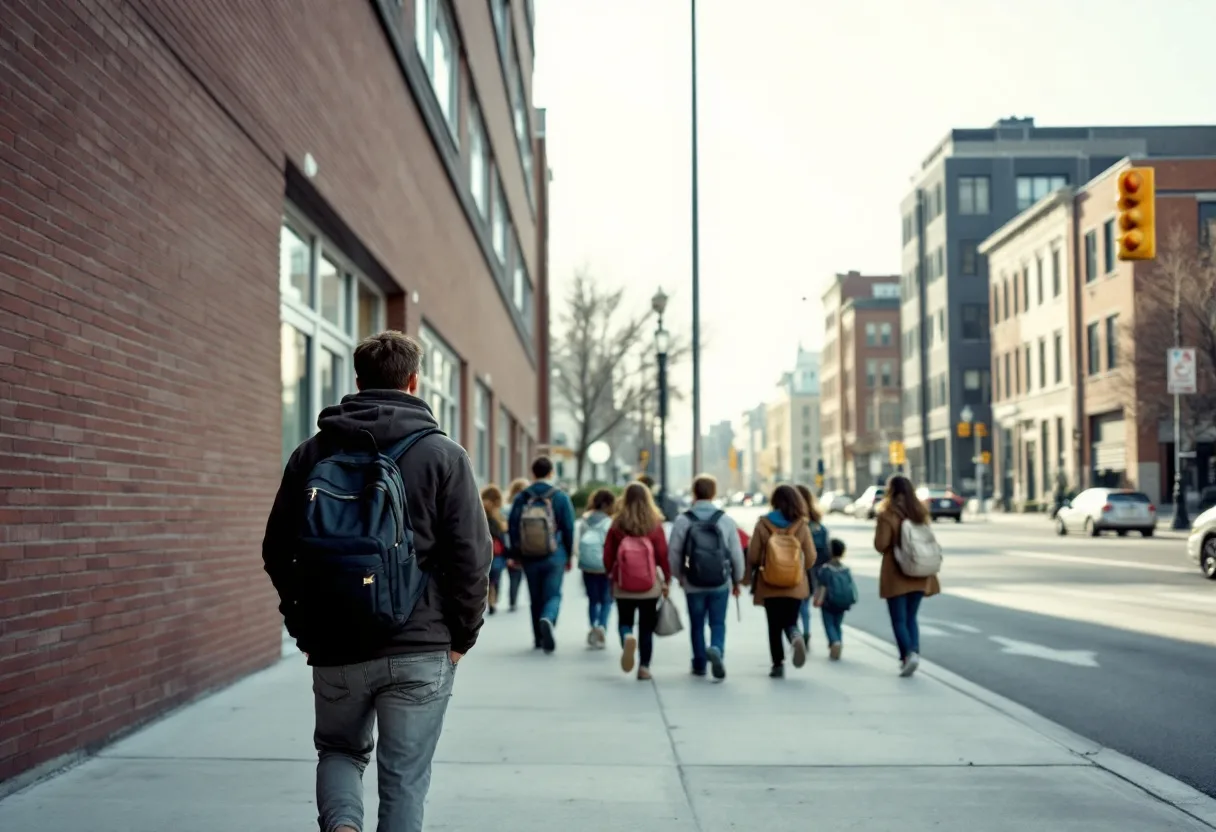
New York public schools: ratings, zones, and reality
The NYC Public Schools system covers more than 1,700 schools and roughly one million students — making it the largest school district in the United States. Schools are assessed through NYC School Quality Reports and independent ratings such as GreatSchools (scale 1–10). Parents looking for New York City schools for Russian-speaking families most often focus on Queens and Brooklyn, where A-rated schools with strong academic programs are concentrated.
Specific neighborhoods with high school ratings:
- Forest Hills, Queens — schools PS 144, PS 196; GreatSchools rating 7–9/10; strong math and science programs
- Bayside, Queens — one of NYC’s academically strongest neighborhoods for families; good transport links
- Midwood, Brooklyn — close to the Russian-speaking community of Brighton Beach; schools with ratings of 8/10 available
- Park Slope, Brooklyn — expensive, but with exceptionally strong schools and an active parent community
Key insider note: a school’s GreatSchools rating may not reflect the actual make-up of the classroom. In Queens, some formally high-rated schools have 60–70% of students enrolled in ESL (English as a Second Language) programmes — which slows the pace of instruction for children who already have strong English. Before enrolling, it is worth requesting the demographic breakdown and details of gifted & talented programmes directly from the school.
For middle and high school (grades 6–12) in NYC, there is a competitive admissions system: children apply to specialized schools through MySchools (myschools.nyc). The top specialized high schools — Stuyvesant, Bronx Science, Brooklyn Tech — require sitting the SHSAT. Preparation is a whole journey in itself, and Russian-speaking families have traditionally performed very well here.
Kindergarten and preschool education in New York
Childcare in New York works differently than in Russia or other CIS countries. The main formats:
- Pre-K (age 4) — a free NYC program run by the city, 6 hours a day, 5 days a week. Enrollment is through Pre-K for All (prek.schools.nyc) and opens in spring for the following school year. Spots are scarce in popular neighborhoods — submit your application in March–April.
- 3-K (age 3) — a similar free programme for three-year-olds, not yet available in all districts.
- Daycare / Childcare center — paid nurseries and preschools for children under 3. Cost in NYC: from $2,000 to $4,500 per month depending on the neighbourhood and format. This is one of the biggest items in a family budget.
- Nanny / Au pair is a common alternative; a nanny in NYC costs $20–35/hour, often from Eastern Europe, including Russian speakers.
Insider: childcare subsidies (NYC Child Care Voucher Program and the federal Child Care Assistance program) are available to families below a certain income threshold. Many recently arrived families are unaware of this and pay full price for the first 6–12 months.
Russian schools in New York: weekend programmes and bilingual education
The Russian school community in New York is a well-established ecosystem that has existed for decades. Children attend on Saturdays or Sundays alongside public school. Key formats and examples:
- Russian American School — one of NYC’s oldest Russian-language schools; the curriculum covers Russian language, literature, history, and mathematics using Russian textbooks
- Brighton Beach Academy — community-oriented, serving Brighton Beach; strong foundation in language and culture
- Several communities at Orthodox churches and Jewish cultural centres also run Russian-language classes.
Tuition at Saturday Russian schools: $150–400 per month, depending on the programme and number of subjects.
The practical value of bilingual schools: children who are bilingual and literate in Russian tend to find it easier later on to pass SAT Subject Tests in foreign languages and gain additional points when applying to college.
Comparing school education options in New York
| Option | Best for | Cost | Key note |
|---|---|---|---|
| NYC Public School (zoned) | Most families as a baseline | Free | Quality depends on the registration district |
| Specialized High School (competitive) | Academically strong teenagers | Free | SHSAT prep recommended 1–2 years in advance |
| Private school (private / independent) | High-income families | $25,000–65,000/year | Financial grants possible |
| Pre-K / 3-K (city) | Children aged 3–4 | Free | Enrollment opens strictly in March–April |
| Russian Saturday school | For families preserving the language | $150–400/month | Compatible with public school |
| Daycare / private nursery | Children under 3 | $2,000–4,500/month | The most expensive option; subsidies are available |
Common mistakes
-
Choosing an apartment without checking the school zone. In NYC, your registered address determines your zoned school. Two buildings on the same street may fall in different zones with very different ratings. Always verify the zone via MySchools before signing a lease.
-
Being slow to apply for Pre-K. Free places in Pre-K for All fill up fast. Families who apply in May or June instead of March often end up with a spot in an inconvenient area — or no spot at all.
-
Overlooking the Gifted & Talented (G&T) program. NYC offers special classes for gifted children with separate testing at ages 4–5. Many Russian-speaking families find out about this too late.
-
Assuming the child will ’just pick up English’ at school. ESL support exists in public schools, but its intensity is often insufficient. Children without additional language preparation lose 6–18 months of adaptation time, which affects their academic progress.
-
Not knowing about childcare subsidies. The NYC Child Care Voucher Program and federal programs can cover a significant portion of daycare costs. The income threshold for some programs is higher than middle-income families expect.
-
Overvaluing private Russian-language schools as a substitute for state schools. Saturday Russian schools are an important cultural and linguistic resource, but they do not replace mainstream education and do not confer American academic qualifications.
Practical takeaway
Children’s education in New York requires planning at least 6–12 months before the move. Families with school-age children should start by choosing a neighbourhood based on a specific school, not the other way around. Queens (Forest Hills, Bayside) and Brooklyn (Midwood, Park Slope) offer the best balance between state school quality and access to a Russian-speaking community. For pre-schoolers, the top priority is applying to Pre-K for All in time while also exploring daycare subsidies. It is worth looking into a Russian Saturday school from the moment you arrive: the language gap between generations in emigration grows quickly.
School didn’t work out in New York? I have a US high school diploma online
Grades 1–12 in Russian, a US diploma, study from any country. Plus the child’s documents — apostille and translation.
Local school not a fit? An American diploma — while your child studies in Russian.
Texas private school, fully online: grades 1–12, curriculum and lessons in Russian, with a High School Diploma and Official Transcript upon completion. Works from any country, compatible with local schooling. Homeschool — €700 per year, Online with daily lessons — from €3,150.
Formats, fees, and enrolmentSchool in New York starts with the neighbourhood
The neighbourhood where you rent will determine your school: in some areas a place at a state school is assigned directly tied to the registered address; in some cases it all comes down to the morning commute. We’ll find housing with an eye on to the school and will prepare your child’s documents from Russia, Belarus, or Ukraine — with apostille and sworn translation. Both take weeks, and application windows are short.
Submit a requestFind you a home near a school
Your neighborhood determines which school will accept you
Preparing school documents
Diploma, transcripts, apostille, and translation
Not a fan of bots — write to a person
The SVOY app — a marketplace for fellow expats
Services, goods, housing, and jobs worldwide. Post your own listing for free.
SVOY SERVICES
We’ll help with that in New York
These tasks are handled by services within the SVOY ecosystem.
American online school
A US high school diploma — and the child studies in Russian: grades 1–12, fully online from any country. Homeschool — €700 per year; Online with daily lessons — from €3,150.
Documents and certificates
Criminal record checks, civil registry documents, school and university certificates from Russia, Belarus, and Ukraine — with apostille and certified translation, remotely. Required for schools, universities, residence permits, and employment.
Real estate
Property rental and purchase worldwide. Free property search and transaction support.
Frequently asked questions
How does school selection work in New York?
The city operates on a catchment zone principle: your registered address almost entirely determines which elementary school your child will attend. The NYC Public Schools system covers more than 1,700 schools and around one million students; quality is assessed through NYC School Quality Reports and independent ratings such as GreatSchools on a scale of 1–10.
Which neighbourhoods in New York have strong schools?
Russian-speaking families most often look at Queens and Brooklyn. Forest Hills has PS 144 and PS 196, rated 7–9 out of 10 with strong maths programmes; Bayside is one of the academically strongest neighbourhoods; Midwood in Brooklyn is close to Brighton Beach and has schools rated 8/10; Park Slope is expensive but offers exceptionally strong schools.
Can you fully trust the GreatSchools rating?
Not always: ratings may not reflect the actual composition of the class. In Queens you’ll find schools with formally high scores where 60–70% of students are enrolled in an ESL (English as a Second Language) program. It’s worth looking beyond the overall grade to the actual student body.
SVOY ECOSYSTEM
What else you may need
Tasks that most often come next. Each is handled by a dedicated SVOY service.
Rent or buy housing
Rental and purchase New York: prices by neighbourhood, property due diligence, and end-to-end transaction support — SVOY HOME.
Go to websiteRegularize your status
Residence permits, visas and status renewals in New York, certificates and apostille — SVOY Legal.
Go to websiteChildbirth and citizenship for the child
Childbirth in New York: clinics, newborn documentation and citizenship — SVOY Baby.
Go to websiteHalal community
Nikah, halal services, and the Muslim community in New York — SVOY Halal.
Go to websiteA U.S. diploma from home: online school in Russian, grades 1–12
Leave your contact — that’s all we need; we’ll ask the rest ourselves. If you’d like, so we can prepare for the conversation in advance, please specify your request below.
Need help relocating to New York?
In the international SVOY community you will find:
- Russian-language chat New York
- Housing and neighbourhoods
- Schools and kindergartens
- Doctors and clinics
- Lawyers and help with paperwork
- Verified contacts and recommendations
If you come with good intentions — you’re one of us.
Join the chat New York